Quantcast
Channel: Augusto Cicare – Redback Aviation

Augusto Cicare – CH1 CH2 Ch3 CH4 CH5 CH6 Helicopter

$
0
0
Homebuilt helicopter genius Augusto Cicare

Augusto Cicare Helicopter History And Timeline

Augusto Ulderico Cicaré was born on May 25th of 1937, in the town of Polvaredas, Saladillo, province of Buenos Aires, Argentina.
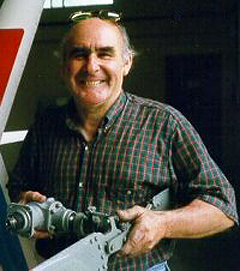
Augusto Cicare Helicopter Designer

Augusto Cicare Helicopter Designer

When Augusto Cicare was 11 year old, studying 5th grade of the primary school, he built his first four-stroke engine and powered a clothes-washer with it. At the same time Augusto converted an automobile engine for the employment of packed gas as fuel instead of naphtha. Augusto was also devoted to the construction of all the tools for his workshop.

At the age of 12 years, Cicaré left the primary school and abandoned his studies forever, but not his capacity to invent. This took him, when he was 15 year-old, to design a 500 cm³ engine with the camshaft at the head and with a 4 speed gearbox.

It was destined to a motorcycle he was about to build, but the circumstances took him to sell the engine to a friend. It was installed in a Harley Davidson motorcycle, and with the money of this engine Augusto started to work on the first parts of what was his life-dream and passion, the helicopter.
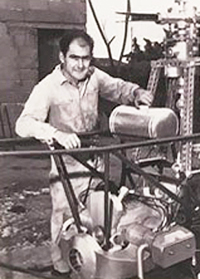
Cicare helicopter engine

Cicare helicopter engine

The young Augusto continued his mechanical education via the “On the Job Training” method. As a young boy, Mr. Cicare would assist the local long distance truck drivers in his village by helping maintain their equipment. The truckers would reward the young Augusto with all sorts of used parts they gathered for him during their road trips. The young Augusto also began to design and built the machine tools needed to create his innovations such as the motor cycle engine, automatic gear boxes and diesel engines.

At 17 years old, Cicare began to develop a fascination for aviation, perhaps by his trucker friends giving him an appetite via aviation magazines. It took the young Augusto only six years to go from simple fascination of flight to designing, building and piloting his first helicopter.


VIDEO: Brief History Of Augusto Cicare’s Earlier Helicopter Designs


Augusto Cicare Helicopter Design Timeline

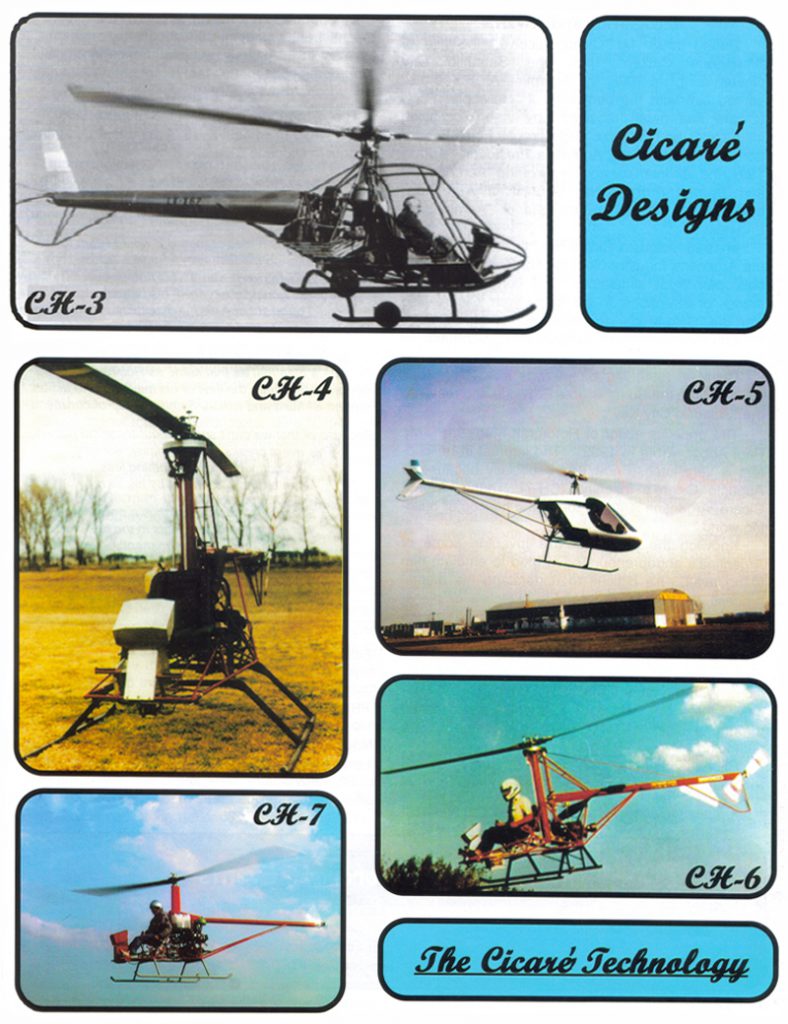
1961: CH-1 Helicopter

In 1958, Augusto accomplished his dearest dream by building and flying his first helicopter, the CICARE CH-1. This became the first aircraft of this type to be developed and built in South America.

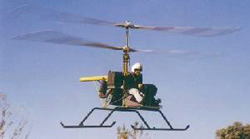
The Cicare CH-1 is a single-seat, single-engine, with coaxial counter-rotating rotors with two blades each. The cyclic command acts on the tilt of the structure that upholds the rotors. The frame of the aircraft is built on steel tubing. The four strokes, four opposed cylinders engine was also designed by Augusto Cicare.

Cicare CH 1 helicopter 1958

Handout picture released by the Cicare family taken in 1958 in Polvaredas, shows Argentine helicopter designer and builder Augusto Cicare (R) working on the CH-1, his first hand-made helicopter, next to his mother | © Familia Cicare/AFP | Ho

The Cicare CH-1 helicopter is the first helicopter designed and built in Latin America. Being the first aircraft of this type ever developed and built in South America, neither the tools nor the materials employed to construct it were for aeronautical uses.

Augusto Cicare helicopter CH1 first flight 1961

Augusto Cicare’s helicopter CH1 first flew in 1961

Augusto Cicare took it upon himself to not only design his own helicopters (and learn to fly them), but also to design the tools in his workshop specifically for this purpose.
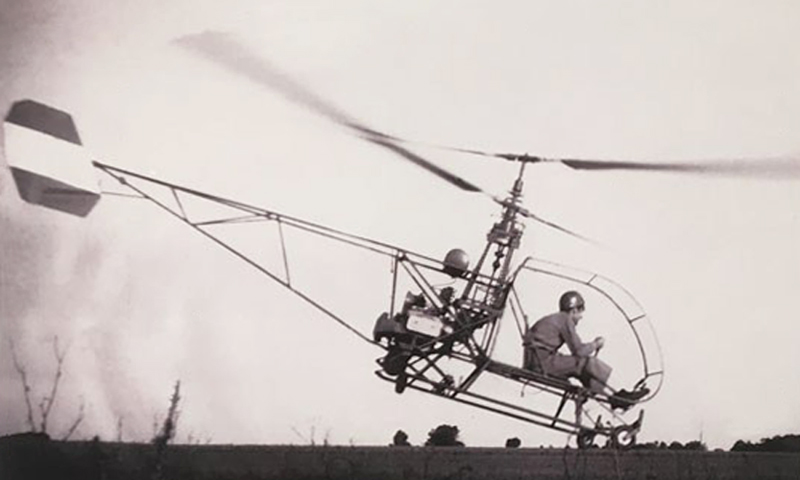
Augusto Cicare CH1 coaxial helicopter

Augusto Cicare CH1 coaxial helicopter

In these early days (late 1950s, early 60s), Mr. Cicare was not aware of the dynamics of rotary wing flight dynamics such as gyroscopic procession (the need to apply the appropriate input 90 degrees in rotation before the desired reaction takes place in the rotor blade system).

Augusto Cicare learned this and many other helicopter aerodynamics principals via the trial and error method. However, once again, this lack of formal training by a talented and observant innovator caused the now 20-ish Agusto Cicare to devise new methods of accomplishing the same end result, but using considerable less components as was being used by others in their helicopter designs.

Cicare 1 helicopter

Test flying the Cicare 1 helicopter

Augusto Cicare CH1 Helicopter Specifications
Capacity 1 person
Length 6.80m
Width 1.60m
Height 2.15m
Number of Blades 4 / 2 sets
Diameter 6m
Material Metal
Engine Type Cicare
Engine Type 4cyl – 4 stroke
Engine Cooling Fan Forced Air
Max Horsepower 60 HP
Engine Capacity 1800cc
Empty Weight 225kg
Gross Weight 330kg
Speed (MAX) 120km/h
Speed (CRUISE) 90km/h
Rate of Climb 7 m/s
Manufacture Date 1961

1964: CH-2 Helicopter

CICARE CH-2: It Is a two-seat conventional helicopter. The frame and the tall boom are made of steel tubes. The main transmission has a belts stage and also a 90° gear stage; the driving to the tail rotor is made through a cardan joint. The main rotor has three blades and the commands are hydraulically controlled.
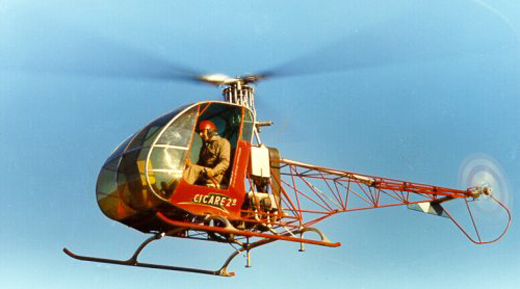
Augusto Cicare CH-2 Helicopter

Augusto Cicare CH-2 Helicopter

This was Augusto’s second helicopter design. For this enterprise Mr. Cicare worked with the support firstly of all his local neighbors at Polvaredas, and secondly then secondly with the support of the National Argentinean Air Force.

This helicopter design was of the more traditional main rotor and anti-torque tail rotor blades. Forever looking for a better solution, his initial swash control system looked quite complex. It would be another 30 years till he perfected his through shaft swashplate system.

Cicare c2 helicopter

Augusto Cicare in his C2 helicopter with locals from his village assisting him

Helicopter Cicare CH-2 design

Helicopter Cicare CH-2 design

It sported what looked like an opposed flat four engine such as an early Lycoming or Continental aircraft type power plant or even possibly a VW (VolksWagon) auto engine with the typical multi-V belt reduction drive – but in fact, was an engine of his own design!

The airframe including tail boom looks very similar to the Bell 47 “MASH” style helicopter and the Baby Bell – later renamed – Safari Kit helicopter.
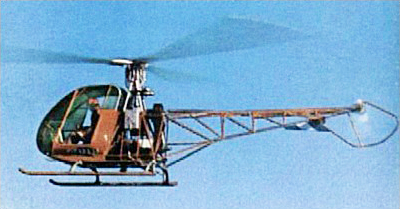
Cicare CH-2 helicopter flying

The complexity of the swash control system looks interesting to say the least! Just looking at it – I’m yet to figure it’s operation – (though it appears the two flat plates might be mounted on a gimbal bearing allowing the squeezing of the plates to provide appropriate tilt for the rotor disk), but knowing Augusto, it would be thoroughly tested and designed to fulfil its purpose.

Augusto Cicare CH2 helicopter hovering
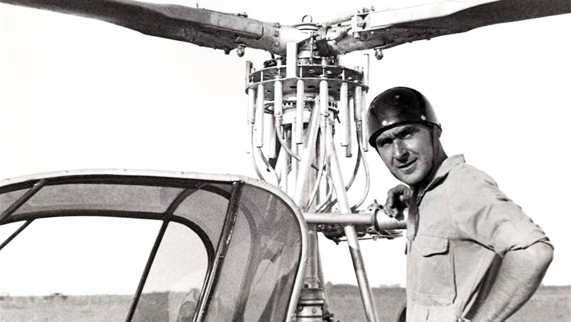
Augusto Cicare CH2 helicopter hovering

Augusto Cicare CH2 helicopter swashplate control

Augusto Cicare CH2 helicopter swashplate control

While you can see the main rotor blade lead-lag pitch links in the images, it appears there are no dampeners with the CH2 relying on the flexibility of the blades alone. There also does not seem to be any flapping hinge in this model, though actual details are unknown.

The tail rotor system seems to be of typical design – standard amongst “most” helicopter designs to this day.

Cicare CH-2 helicopter with village

Cicare CH-2 helicopter built and tested with the help of Augusto’s local village

Augusto Cicare CH2 Helicopter Specifications
Capacity 1+1
Length (inc. rotor) 8.45m
Width 1.80m
Height 2.35m
Number of Blades (main rotor blades) 3
Main Rotor Diameter 7.30m
Main Rotor Material Composite (fiberglass blend)
Number of Blades (tail rotor) 2
Tail Rotor Diameter 1.15m
Tail Rotor Material Metal – Aluminum
Engine Lycoming HO-360-A1A
Engine Type 4 cyl Opposed – 4 stroke
Engine Cooling Fan Forced Air
Horsepower (MAX) 180 HP
Empty Weight 390kg
Gross Weight 690kg
Speed (MAX) 165km/h
Speed (CRUISE) 135km/h
Range 400km/3hrs
HOGE (HOVER OUT OF GROUND EFFECT) 3200m
Rate of Climb 6.5 m/s
Date of Manufacture 1964

1969: Airplane Flight Simulator

Cicare created an airplane flight simulator, the first one built in South America. The Argentinean Ministry of Education and Culture named Augusto as Technical Master.

On the same year the English publication Jane’s published an extensive article about all the realizations of this Argentinean helicopter manufacturer, while not a Sikorsky, his contributions to the evolution of the helicopter have been equally important to the continued technological advancements of rotary winged flight.


1974: CH-3 Colibri Helicopter

Around 1973, as a result of a contract with the Argentine Air Force and private investors, he designed and built the prototype of his third helicopter, the CICARE CH-3, He adapted a car engine to be used in this aircraft. Due to budget difficulties, the Air Force had to cancel this contract. The model was finally built thanks to his personal efforts. At the time, this prototype represented the most exceptional work in that field worldwide, due to the use of a four-blade rigid rotor, with the hub made of composites. This model also had an hydraulic system to assist the commands.
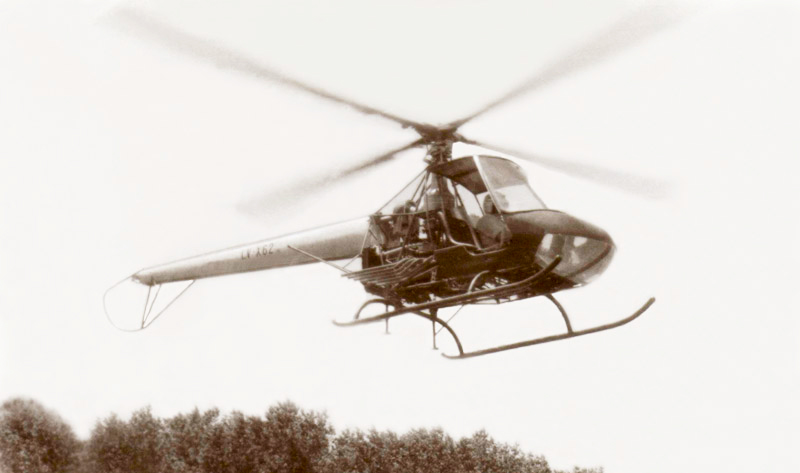
CH3 helicopter by Augusto Cicare

CH3 helicopter by Augusto Cicare

As a result of a contract with the Argentinean Air Force and private managers, Augusto designed and built the prototype of his third helicopter.

The Cicaré CH-3 Colibrí was the third helicopter that designed and constructed Argentine engineer Augusto Cicaré. Its design began in August 1973 and was completed in 1974.
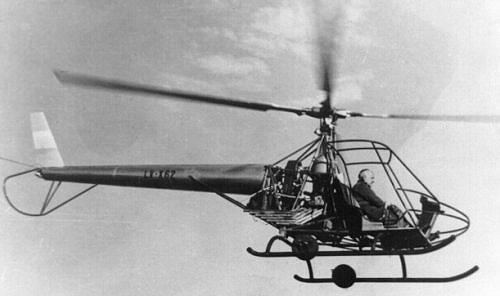
Cicare CH3 helicopter

Cicare CH3 helicopter

He adapted an automobile engine to be used in this helicopter along with typical v-belt reduction drive through a 90 degree gearbox. This allowed for a range of less expensive power options.

Mr Cicare also incorporated such innovative ideas as using a rigid rotorhead with composite rotorblades allowing for flapping and lead-lag movement.
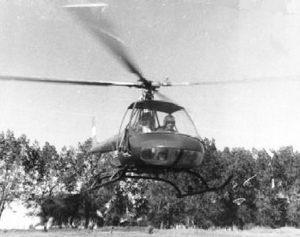
Flight testing CH-3 helicopter

Flight testing CH-3 helicopter

This helicopter began development by means of a contract with the Argentine Air Force with the objective of obtaining an aircraft useful for flight training and agricultural tasks.

He made his first flight in 1976. During 1975-1976 underwent profound modifications that resulted in a variant called C.K.1.

For economical reasons, the Air Force had to interrupt the contract and the Cicare CH-3 helicopter design was finished only with personal efforts. Here you can see Augusto test flying his own work, check out the multiple exhaust pipes!
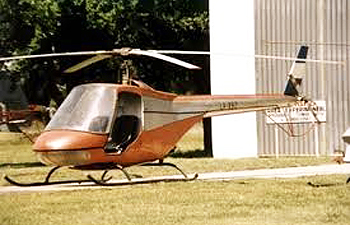
Cicare CH-3 Colibri CK1 helicopter

It is a bi/tri-seat helicopter, with the seats located side by side. It has a rigid type four-rotor rotor and rotor hub made of fiberglass reinforced plastics. The structure is made of steel tubes and aluminum sheets.

The engine comes from a car and was adapted to the helicopter by Cicaré.

The Cicare CK1 can be seen here with it’s fully enclosed body improving comfort and performance significantly.
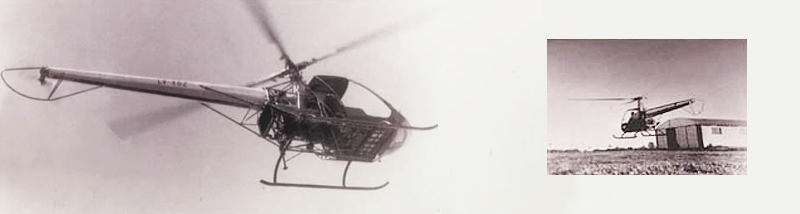
Cicare 3 helicopter

Augusto Cicare CH3 Helicopter Specifications
Capacity 2 or 3
Engine 1 x Chrysler 8-cylinder piston engine
Engine Rated Power 150kW
Engine Cooling Forced Air – Radiator/Water
Number of Blades (main rotor) 4
Main Rotor Diameter 7.60m
Main Rotor Material Composite
Number of Blades (tail rotor) 2
Tail Rotor Diameter 1.18m
Tail Rotor Diameter Metal – Aluminum
Length (including rotors) 8.53m
Fuselage Length 6.90m
Height 2.47m
Width 1.80m
Gross Weight (max take-off weight) 800kg
Empty Weight 469kg
Speed (MAX) 163km/h
Speed (CRUISE) 120km/h
Hovering Ceiling (HOGE) 1700m
Range 300km/2.5hrs
Rate of Climb 6.5 m/s
Date of Manufacture 1976

1982: CH-4 Helicopter

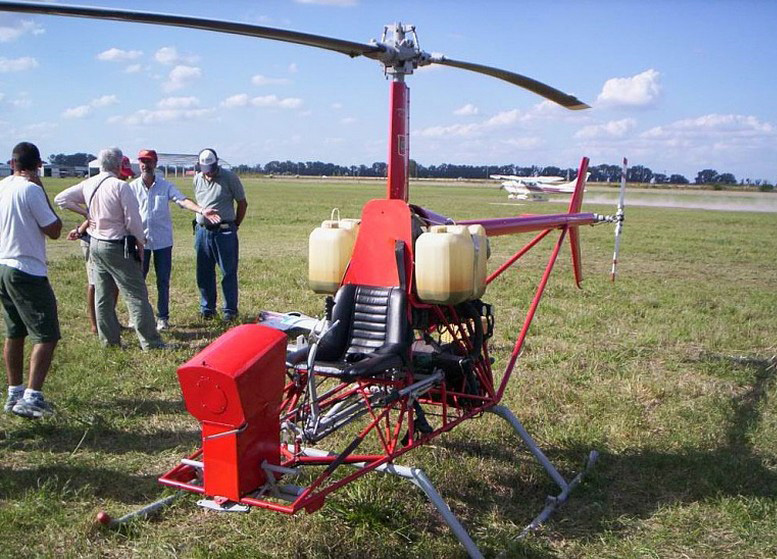
His fourth helicopter model, the single-seat CICARE CH-4, appeared in 1982. It was built exclusively with argentine materials, including the 55 H.P. engine. This helicopter proved to have exceptional handling with respect to maneuverability and stability. The CICARE CH-4 in an ultra-light conventional helicopter. It’s the first one in this category, built with the same mechanical solutions as standard helicopter categories. The engine is a two-stroke, two opposed cylinder design, developed by Augusto Cicare by using a selection of motorcycle parts and his own machined parts.

Cicare CH4 helicopter

The CH-4 was the theory behind the CH-6 that eventually became the CH-7 Angel

The Cicare CH-4 helicopter was one of the first ultralight helicopters available in the world (1980).

To reduce cost and reliance on foreign materials, this light personal helicopter was made using national materials, including the engine.

This helicopter proved to have excellent maneuverability and improved stability in hovering and all flight parameters.

An effective design idea using a pivoting type through shaft swash control system for controlling direction and altitude.

This proof of concept design was to open the way for the CH-6 which then went on to become the CH-7 and CH-7 Kompress tandem two seater.

CH4 Homebuilt Helicopter

The original Cicare CH-4 helicopter used a two-stroke engine he designed from a mix of motorcycle engine parts and his own custom made parts

This particular helicopter has been sold by other companies under the names – “Lark” by Helicraft, “SkyLark” by Vortech and the “Furia” helicopter by Plans Delivery – Osvaldo Durana (Deceased). The Furia version homebuilt helicopter seems to be a commercialization of the original design with the addition of a publically available aircraft two-stroke engine with highly detailed construction and machining drawings.

If you are a skilled engineer, this one’s for you! If not…the cost of having the complex parts made would probably exceed the cost of a kit helicopter. Though flight performance is nothing short of excellent, it is extremely complex and the overhead gearbox noisy and complex.

VIDEO: The CH-4 Helicopter being used for flight training

CH-4 Furia Skylark helicopter

Augusto Cicare CH4 Helicopter Specifications
Capacity 1
Engine (Cicare original) Opposed 2-cylinder two-stroke piston engine
Engine Rated Power 55 HP
Engine Capacity 500cc
Engine Cooling Air
Number of Blades (main rotor) 2
Main Rotor Diameter 6m
Main Rotor Material Composite
Number of Blades (tail rotor) 2
Tail Rotor Diameter 1.10m
Tail Rotor Diameter Metal – Aluminum
Length (including rotors) 7.53m
Height 2m
Width 1.60m
Gross Weight (max take-off weight) 270kg
Empty Weight 135kg
Speed (MAX) 130km/h
Speed (CRUISE) 100km/h
Hovering Ceiling (HOGE) 2100m
Range 200km/2hrs
Rate of Climb 6.5 m/s
Date of Manufacture 1982

1986: CH-5 – AG Helicopter

Cicare CH-5 helicopter

Cicare CH-5 helicopter

The Argentinean National Air Force signed another agreement with Mr Cicare to develop a helicopter primarily for domestic agricultural tasks, this helicopter was equipped with a Lycoming aircraft engine with a power of 150 HP.

Augusto designed and built a light helicopter with the capability of carrying out the required agricultural tasks, basically fumigation. Augusto named it CH-5. This robust helicopter propelled by an aircraft Lycoming engine has an airframe of steel tubes, with the blades and the cabin made of composite.

Thus evolved yet another original design by Augusto – the CICARE CH-5-AG. There is video footage of this helicopter flying around an airfield during a demonstartion. It had impressive performance and looked much like the layout of a Robinson R22 two seat helicopter.

Augusto Cicare CH5 Helicopter Specifications
Capacity 1
Engine 4-cylinder Lycoming O-320-A2C four-stroke piston engine
Engine Rated Power 110kw
Engine Cooling Forced Air
Number of Blades (main rotor) 2
Main Rotor Diameter 7.70m
Main Rotor Material Composite
Number of Blades (tail rotor) 2
Tail Rotor Diameter Metal – Aluminum
Fuselage Length 6.80m
Length (including rotors) 8.85m
Height 2.25m
Width 1.80m
Gross Weight (max take-off weight) 620kg
Empty Weight 305kg
Speed (MAX) 170km/h
Speed (CRUISE) 145km/h
Hovering Ceiling (HIGE) 1950m
Hovering Ceiling (HOGE) 1350m
Date of Manufacture 1986

1987: CH-6 Helicopter

Cicare CH6 helicopter

Cicare CH6 helicopter

Parallel to the development of the CH-5 and with the objective of testing in flight some new systems and elements to be used in the CH-5 arose the single-seat mini-helicopter CH-6, with a 64 HP engine. Augusto patented the novel control system of this helicopter.

It was this alternative control system that revolutionised the kit built industry with it’s unrivalled natural stability and reduced centrifugal forces creating a lightness to the cyclic feel not to mention minimising drag by encasing the controls within the main rotor shaft.


Prototype CH6 helicopter
Augusto Cicare CH6 Helicopter Specifications
Capacity 1
Engine 2-cylinder Rotax 582 two-stroke piston engine
Engine Rated Power 48kw
Engine Cooling Electric Fans/Radiator – Water
Number of Blades (main rotor) 2
Main Rotor Diameter 6.0m
Main Rotor Material Composite
Number of Blades (tail rotor) 2
Tail Rotor Diameter ?
Tail Rotor Diameter Metal – Aluminum
Fuselage Length 5.45m
Length (including rotors) 7.15m
Height 1.92m
Width 1.60m
Gross Weight (max take-off weight) 320kg
Empty Weight 180kg
Speed (MAX) 140km/h
Speed (CRUISE) 100km/h
Hovering Ceiling (HIGE) 3500m
Range 300km/3hrs
Date of Manufacture 1987
Augusto Cicare flight testing LV-X 101 CH6 turbine powered

Augusto Cicare flight testing LV-X 101 CH6 turbine powered helicopter

Labala Turbine GFL32 being tested on the Cicare helicopter CH-6T, this made this Helicopter truly one 100% made and designed in Argentina Argentina.


1990: CH-6 Helicopter Demonstration

Mr Cicare’s CH-6 helicopter design was later successfully presented to the public at the Oshkosh Air Show and was a huge crowd pleaser.


Early flight testing Cicare CH6 LV-X101 helicopter

Early flight testing Cicare CH6 LV-X101 helicopter


The post Augusto Cicare – CH1 CH2 Ch3 CH4 CH5 CH6 Helicopter appeared first on Redback Aviation.


Augusto Cicare – CH7 Angel CH8 SVh3 CH10 CH11 Helicopter

$
0
0
Cicare CH11c Coaxial Helicopter

Augusto Cicare Helicopter History And Timeline

1991: CH-7 Helicopter

Cicare CH7 helicopter

Augusto Cicare CH7 Angel helicopter

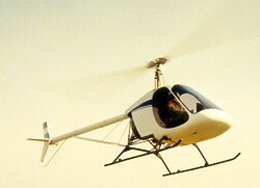
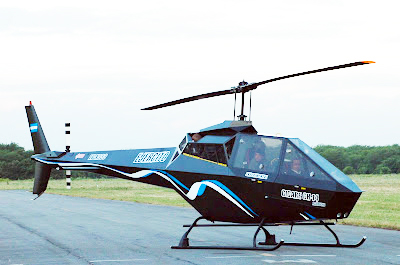
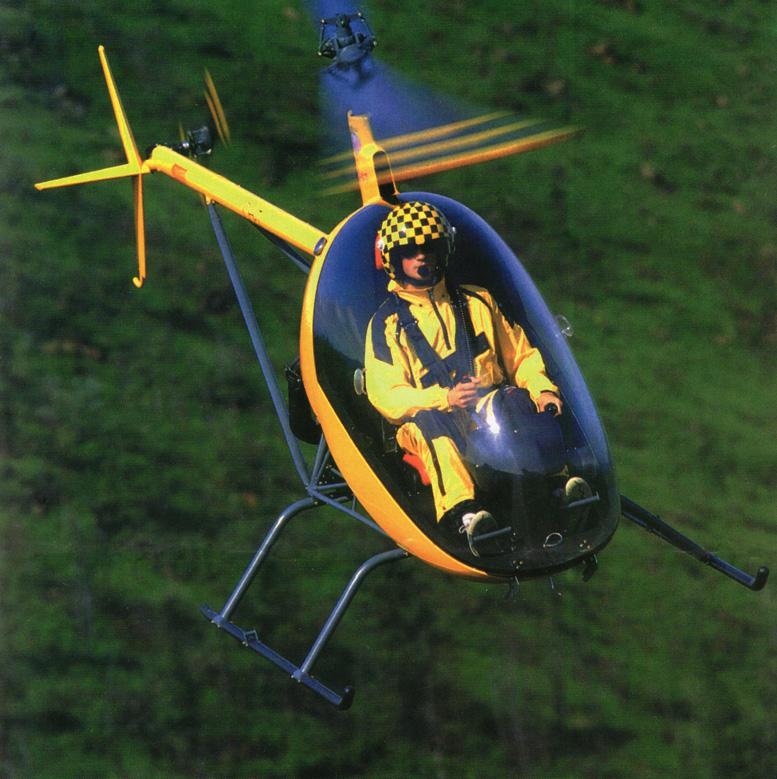
Derived from the CH-6 the CH-7 helicopter by Augusto Cicare sported a sleek new composite cabin along with many mechanical improvements in both reliability and performance.

The updated Angel CH-7 helicopter carried out flight demonstrations at Recife, Brazil on the year 1991. On 1992 the CICARE CH-7 was presented in the “Ultra-Lights International Meeting” at Bassano del Grappa, Italy and in the Oshkosh Air Show at the USA.

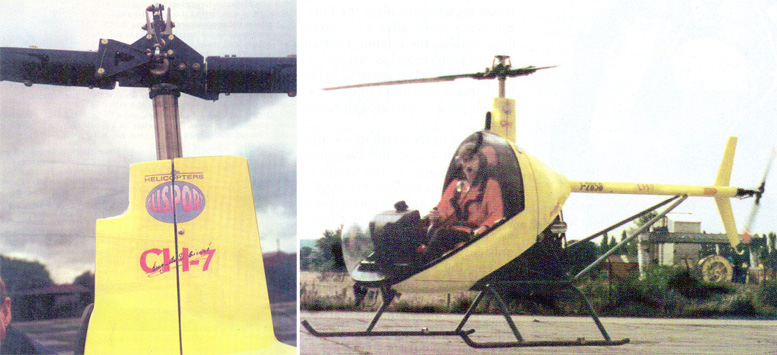
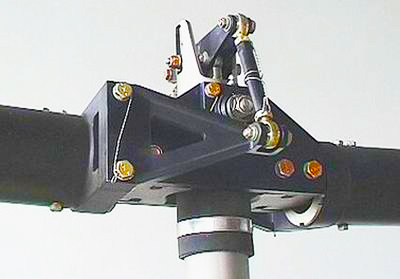
Angel CH7 Rotorhead

Angel CH7 Rotorhead

The CH-7 helicopter didn’t find much of a market in the USA due to its significantly higher cost when compared to other kit helicopters being offered though at the time, the price was a definate reflection of the CH-7 Angels supurb quality and refined engineering. It wasn’t long that the Angel CH-7 helicopter found a strong following through out the European countries and now it is so popular there that you can find specific CH-7 helicopter flyers clubs in many locations.

After some time the CH-7 dropped it’s two stroke Rotax 582 engine in favour of the Rotax 912 four stroke engine. While there was an instant boost in power and reliability, it didn’t take long to realise the potential of a tandem two seat version and what followed was the CH-7 Kompress including the Rotax 914 turbo charged engine.

CH7 helicopter swashplate system

CH7 helicopter swashplate system designed by Augusto Cicare

The CH-7 Angel was dropped from production as the Kompress helicoter, being a tandem two seater could easily be flown as a single seater. (Editors Note: There have been many experimenters adapting different engines to this chopper including rotary engines, two and four stroke engines and even turbines which marry up well to this chopper.)

Over 500 CH-7 helicopters were manufactured under licence in Italy and sold in the European market.

CH7 helicopter swash control system

CH7 helicopter swash control system


VIDEO: Presentation Of The Angel CH-7 Kit Helicopter – (courtesy Beyond 2000)


VIDEO: Mangalore Airshow Flight Demonstration


1996: CICARE HELICOPTEROS S.A.

Cicare helicopters logo

Cicare Helicopters S.A. Logo

With the purpose of supporting Mr. Cicaré in the organization and commercialization of his ingenious inventions, CICARE HELICOPTEROS S.A. was formed; where Mr. Augusto U. Cicaré is Director and technical responsible.

This allowed for a more commercialized helicopter design and development operation.


1993: CH-8 2002 VL Helicopter

Cicare CH8 helicopter

Cicare CH8 helicopter

It seemed a logical progression to the CH-8 as a result of the CH-7’s success. This prototype is a very light, two-seat two-engine helicopter. Being twin engined it was necessary to use two stokes for their lighter weight.

A feature of this helicopter is that it allows flying at the minimum power speed, with only one operative engine. It’s basic layout was based on the original CH-6 triangulated chromoly steel airframe.

While maybe seen as the next logical progression, it’s practicality is questionable to say the least. Most modern helicopters powerplants have reasonable reliability and the high fuel consumption of running twin two stroke engines would leave you wondering why just a single more reliable turbine wasn’t used.

1994: SVH-3 Training Helicopter

SVH-3 training helicopter

The unique SVH-3 training helicopter – another worlds first by Mr. Cicare

The SVH-3 is an advanced simulator-trainer of helicopter flight. It allows for reduced-cost flight training in a single seat helicopter while under the close guidance of a professional instructor.

Designed to teach and train people to become helicopter pilots safely while experiencing actual “true flight” technically, without ever leaving the ground.

The Cicare SVH-3 Helicopter flight simulator/trainer. This was awarded a gold medal for the best invention in the world at the Geneva 1999 conference


VIDEO: Cicare Helicopters SVH-3 Flight Demonstration


1996: CH-7 2000 Angel Helicopter

Cicare CH-7 2000 helicopter

Augusto Cicare CH-7 2000 Angel helicopter

To give the sport flight a higher reliability, Augusto created an ultra-light, single-seat, twin-engine helicopter that could land with only one operative engine, taking the safety to the first stage.

This would have to be one of very few twin piston engine light helicopters ever conceived. While the idea behind this sleek looking design of twin engine reliability was the obvious motivation in this design, as previously mentioned, I would still question it’s practical viability.


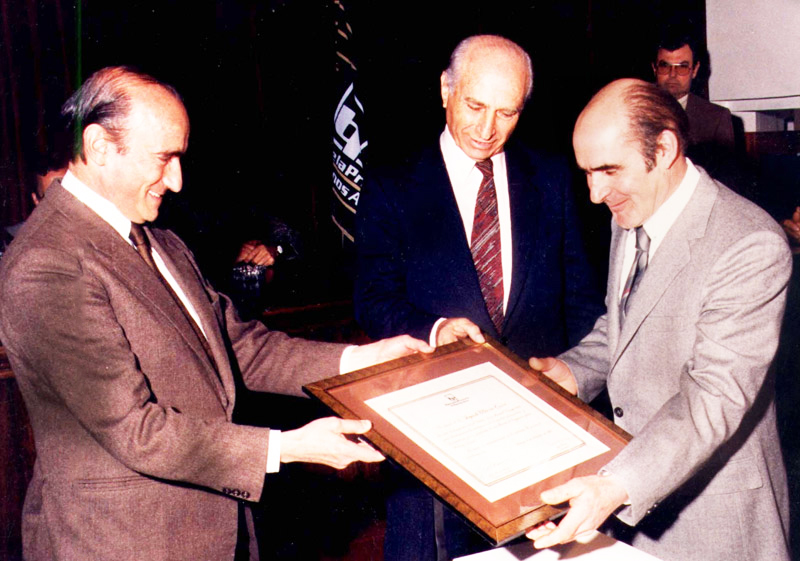
1997: Augusto Cicare Aeronautic Award

Augusto Cicare Aeronautic Spatial Engineer Award

Augusto Cicare Aeronautic Spatial Engineer Award

The Professional Council of the Aeronautic and Spatial Engineering conferred to Augusto the Honorary Title of Aeronautic and Spatial Engineer, for being a reference in the field of Aeronautic Engineering all over the world.

The name “Augusto Ulderico Cicaré” appears in the outstanding aeronautical encyclopedias and manuals of every country.

Other Awards

Augusto participated with the simulator CICARE SVH-3 in the invention contest “Ladislao Jose Biro”, under the auspicious of the National Institute of the Industrial Property (INPI) and of the Argentinean Association of Inventors.

Augusto Cicare electric helicopter trainer

Augusto Cicare testing what looks to be an electric version of his helicopter trainer

Augusto won the first prize in the Mechanics Category and the CICARE SVH-3 was selected as the best national invention of the year, with the recognition of the Inventors International Federation (IFIA) and of the World Organization of the Intellectual Property (OMPI).

That way he represented Argentina at the International Exposition of Inventions at Geneva, Switzerland from April 30th to May 9th of 1999 obtaining the gold medal of the “P” Category (Aeronautics, Nautics, Vehicles and Accessories).

Augusto Cicare with helicopter

Augusto Cicare with helicopter


1997: CH-10C & CH-11S/C

Cicare CH11s helicopter coaxial rotor system

Cicare CH11s helicopter coaxial rotor system

The CH-10 is a counter-rotating single-seat twin-engine helicopter prototype with an absolutely novel control system.

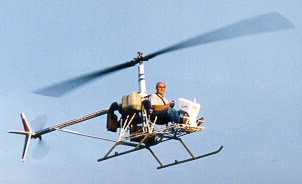
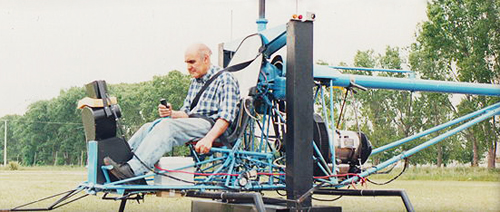
In this picture we see Augusto Cicare test flying his own CH-10/CH-11 helicopter design. The prototype is powered by a Rotax 582 with the tail boom there only to maintain the proper CG during testing.

The airframe for the prototype coaxial CH-10/CH-11 helicopter is based on the CH-6, CH-7 Angel and Kompress design. This way he avoids major surgery on the frame or the additional expense just to create a new airframe that would fix the CG problem created by removing the tail boom.

So, when viewing this photo, forget the tail boom since anti torque is not needed. However, if U look closely, Senor Cicare has a little right peddle pushed in.

To maintain a heading or to turn the nose left or right, pushing in one for the peddles caused a difference in-between the normally uniform pitch setting between the two sets of counter rotating rotor systems. Simple, but I am sure not an easy task to accomplish on two rotating disks at 500 +/ – RPMs or so, in the opposite directions.


1997: CH-10C & CH-11C

Augusto Cicare CH-11C Helicopter

Augusto Cicare CH-11C Helicopter

The CH-10C counter-rotating single-seat twin-engine helicopter with novel control system.

This helicopter was given to CITEFA (Argentine Ministry of Defense, Institute of Scientific and Technical Investigation of the Armed Forces), being for the development of a Unmanned Remote Controlled Vehicle for multiple uses.

There is little information available for this model but I must say, with it’s compact size and sleek lines, it is one good looking little machine.

Photo Credit: Sentidos


1998: CICARE SVH-3/4

Augusto Cicare SVH-4 Helicopter

Augusto Cicare SVH-4 Helicopter

Augusto participated with the simulator CICARE SVH-3 in the invention contest “Ladislao José Biró”, under the auspicious of the National Institute of the Industrial Property (INPI) and of the Argentinean Association of Inventors.

Augusto won the first prize in the Mechanics Category and the CICARE SVH-3 training helicopter was selected as the best national invention of the year, with the recognition of the Inventors International Federation (IFIA) and of the World Organization of the Intellectual Property (OMPI).

That way he represented Argentina at the International Exposition of Inventions at Geneva, Switzerland from April 30th to May 9th of 1999 obtaining the gold medal of the “P” Category (Aeronautics, Nautics, Vehicles and Accessories).

Cicare SVH4 helicopter trainer

Cicare SVH4 helicopter trainer


Visit Cicare’s New SVH-4 Page – (external link)


Australian operators: Brumby Helicopters – (external link)


The post Augusto Cicare – CH7 Angel CH8 SVh3 CH10 CH11 Helicopter appeared first on Redback Aviation.
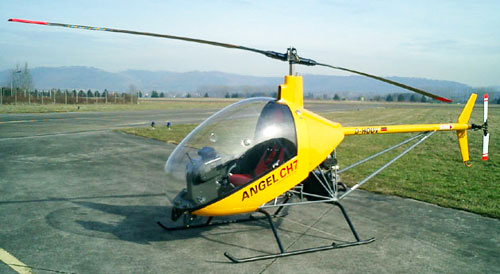
Augusto Cicare – CH12 CH14 CH16 Helicopter

$
0
0
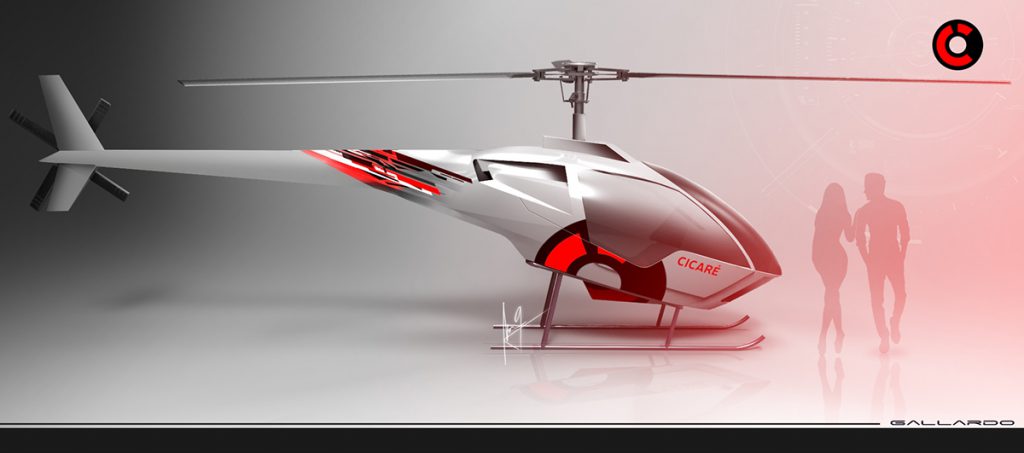
Cicare drone helicopter

Augusto Cicare Helicopter Design

2000: CH-2000 & CH-2002 Helicopter

CH-7 2000 helicopter

Augusto Cicare CH-2000 & CH-2002 Helicopter

During this period, efforts were continued in further development and improvement of these associated models to refine and improve the designs overall. (CH-7 2000, CH-2000, CH-2002)

These models were primarily experimental test-beds for new designs that were soon to follow – that is why there is very little information available on these particular helicopter models.


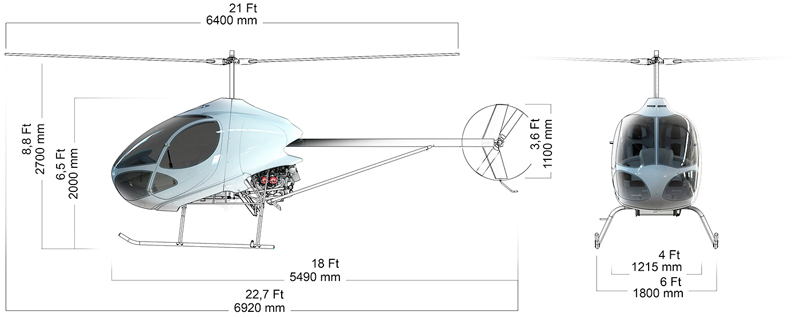
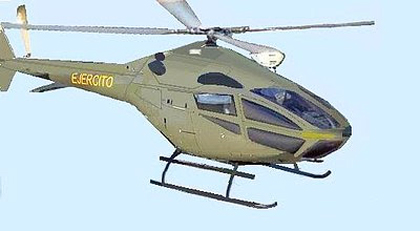
March 2007: Cicare CH-14 Aguilucho Helicopter

Augusto Cicare CH-14 Helicopter

Augusto Cicare CH-14 Helicopter

A light two-seat tandem helicopter, development began in January 2005 under an Argentine Army request in conjunction with CITEFA, La Plata University and Army Aviation Maintenance Batallion.

The Cicare CH-14, a multipurpose tandem 2 seat single turbine helicopter was originally designed for military use.

Was first revealed Nov 23, 2007 during the Army Aviation Day and is intended to be used in both civilian and military applications.

Looking much like the US Cobra Attack helicopters but built much lighter by design from the ground up. While it may appear to emulate the US Cobra helicopter, it does seem to be a bare-bones version without armament or weaponry being fitted. The helicopter is typically turbine powered with tandem seating giving a very streamlined military looking chopper.

CH-14 HELICOPTER SPECIFICATIONS
Powerplant Rolls Royce Allison 250-C20-B
Maximum Power 420 hp
Maximum Continuous Power 370 hp
Gross Weight (MTOW) 1450 kg
Empty Weight (OEW) 750 kg
Useable Load 700 kg
Maximum Speed (VNE) 240 km/h
Cruise Speed 210 km/h
Range 630 km
Climb Rate 8 m/s
Service Ceiling 4500 mts

It certainly has the future potential for protective light armour and mounting weaponry though, or even as a trainer for the military. There is a lot of information available on the internet for those wishing to find out more about this design. Simply “Google” Cicare CH-14.


VIDEO: Cicare CH-14 helicopter


2009: Cicare CH-7B Helicopter

Augusto Cicare CH-7B Helicopter

Augusto Cicare CH-7B Helicopter

The Cicare CH-7B is yet a further refinement of the CH-7 single seat kit helicopter (previously known as CH-6) designed for sport and recreational use.

It is an evolution of the Ch-6 and CH-7 Angel helicopters with a notable increase in performance with the new refined version having been repowered with the Rotax 912 ULS 100HP four stroke engine adding to endurance, performance and reliability.

CH-7B HELICOPTER SPECIFICATIONS
Powerplant Rotax 912 uls (100 hp)
Gross Weight 430 kgs (950 lbs)
Empty Weight 250 kgs (550 lbs)
Maximum Speed (VNE) 105 kts – 194 kmh (120 mph)
Cruise Speed 80 kts – 150 Kmh (94 mph)
Climb Rate 7 m/s (1380 ft/m)
Service Ceiling 3500 mts (11,500 ft)
Endurance 2.5 hrs

The CH-7B helicopter also features minor cabin changes along with engineering improvements. Quality Aeronautical components are used throughout its construction and its spacious cockpit and enhanced visibility allow for maximum flight comfort and enjoyment.


VIDEO: Cicare CH-7B helicopter


VIDEO: Helicoptero Cicare CH-7B Brasil


2009: CH-12 Helicopter

Augusto Cicare CH-12 Helicopter

Augusto Cicare CH-12 Helicopter

The two seat Cicare CH-12 is the latest company design. A two seat light helicopter for private and recreational use, it reflects the experience and skills of Augusto Cicare and the creativity of the avant-garde team of helicopter design engineers.

This particular design seems to incorporate the traditional style of helicopter swash plate along with a new composite cabin and tail boom.

The result is an aesthetically pleasing helicopter with mechanical ingenuity that leads to simplicity and optimal operation with inbuilt security. Currently, it is equipped with a Subaru EJ25 engine, however it has been designed to also accept a Lycoming O-360.

CH-12 HELICOPTER SPECIFICATIONS
Powerplant Subaru EJ25 or Lycoming 0-360
Gross Weight (MTOW) 700 Kg (1540 lbs)
Empty Weight (OEW) 430 Kg (946 lbs)
Maximum Speed (VNE) 205 Kmh (128 mph)
Cruise Speed 160 Kmh (100 mph)
Climb Rate 7 m/s (1380 ft/m)
Service Ceiling 3500 mts (11,500 ft)
Endurance 3.0 hrs

VIDEO: Augusto Cicare CH12 two seat helicopter

March 2010: CH-7 2000VL Helicopter

Augusto Cicare CH-7 2000VL Helicopter

Augusto Cicare CH-7 2000VL Helicopter

To give even greater reliability to sport helicopter flying, in 1996 Augusto Cicare created the CICARE CH-7 2000VL. It was later presented to the public in 2010 (images unavailable).

This was an ultralight helicopter with two seperate and independent engines that can land with only one of the engines operating, thus giving greater security and minimizing risks from engine failure during flight.

The following two models in the video were shown at the EAA Argentina Annual Meeting – with designer Augusto Cicare.


VIDEO: Cicare CH-7B 2000VL – CH-12 helicopter


20??: CH-8 Helicopter

Cicare CH8 two seat helicopter

Cicare CH8 two seat helicopter


Cicare 8 technical specifications

Cicare 8 technical specifications

2012: CH-16 Helicopter

Augusto Cicare CH-16 Helicopter

Augusto Cicare CH-16 Helicopter

Conceptual drawing sporting the familiar cabin design that has become a trademark of Augusto’s more modern designs.

It looks like this is to be a competitor for the Hughes 500 or Bell 206 size helicopters though I wasn’t able to find any supporting information. You will note the advanced design rotorblade tips now popular for reduced drag, increased speed, and noise reduction.

Cicare CH-16 helicopter design

Cicare CH-16 helicopter design


Cicaré S.A is an Argentinean company dedicated to the design and manufacture of light helicopters. Mr Augusto Cicaré, the chief technician, has more than 50 years of helicopter design and manufacturing experience. He has developed more than 14 different helicopters including designing his own engine.

Currently, the company manufactures the SVH-3 Helicopter flight simulator/trainer and is starting the production of its latest designs: the Cicare CH-7B single seat, and the CH-12 two seat kit helicopters designed for military use.


VIDEO: Argentine whiz kid to homemade helicopter guru

Currently, the Cicare company manufactures the SVH-3 Helicopter flight simulator/trainer and is starting the production of its latest designs: the Cicare CH-7B single seat helicopter, and the CH-12 two seat kit helicopter designed for military use


VIDEO: CH77 Ranabot 2013 new Helicopter

Igi Barbero with the new CH77 Ranabot Helicopter in Val Gardena with Rotax 914 turbo four stroke engine


Cicare helicopter museum

Cicare helicopter museum


Augusto Cicare with his many helicopters

Augusto Cicare with his many helicopters – an amazing achievement of one man


Visit – Cicare Helicopters – for further information. (External link)


The post Augusto Cicare – CH12 CH14 CH16 Helicopter appeared first on Redback Aviation.
Augusto Cicare Helicopter History Details

$
0
0
Cicare CH helicopter agriculture work

Augusto Cicare Helicopter History Details

Augusto first Cicare 1 helicopter

Augusto first Cicare 1 helicopter

The Cicare Technology

Inventor Thomas A. Edison said: “Genius is one percent inspiration and 99 percent perspiration”, and this is the way that Mr. Cicare explains his work on various apparatus and systems. Helicopters in particular, developing on little theory and much work; trial and error without rest. Mr. Cicare is like a legend who has overcome the Argentine frontier. People from many countries around the world often go to his hangar to visit this extraordinary man.

A long time ago, when he was working on one of his early projects, a helicopter landed near his workshop. As Cicare approached the helicopter, the pilot opened the door and said: “I am looking for Mr. Cicare.” Cicare answered, “It’s me”. The pilot then congratulated Cicare on his work. Events like these make Mr. Augusto Ulderico Cicare very happy because he realizes that others recognize his efforts.

Augusto Ulderico Cicare The Beginning

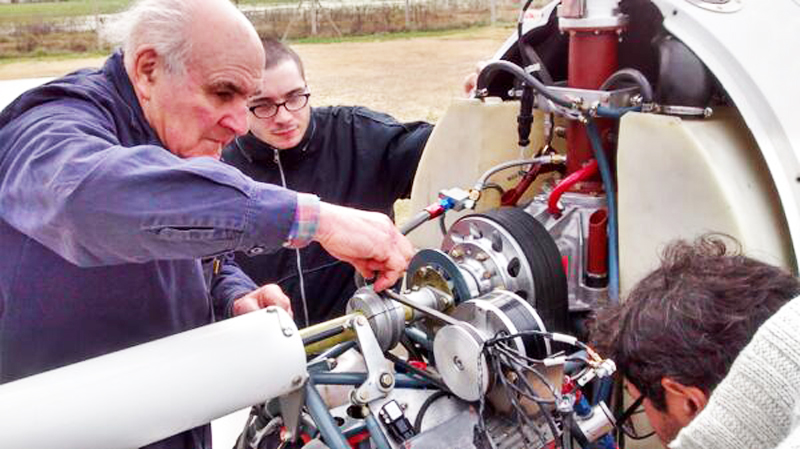
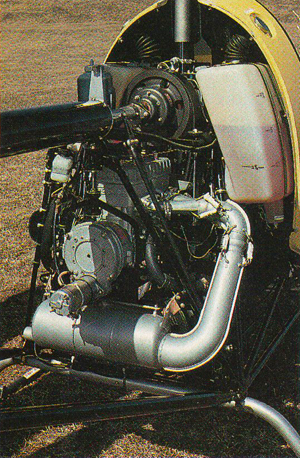
The Augusto Cicare Engine

The Augusto Cicare Engine

Mr. Augusto Ulderico Cicare was a self-made inventor who was born in the Buenos Aires province of Polvaredas in 1937. He has a strong intellect and is considered a “genius” by many important people who know him. Cicare is a partner of the Cicare Helicopters S.A. firm.

He is in the business of developing light helicopters and flight simulators at his location in Saladillo City, Buenos Aires province. Several of Argentina’s newspapers, magazines and TV programs have publicized his developments. During his life he has received many awards for his technical abilities.

Cicare found his inspiration and knowledge through the development process of his helicopter technology. Living in a small province he had limited access to technical knowledge, but nonetheless, used similar processes as most helicopter factories. It’s amazing that his helicopters could fly.

The aviation industry proves by documentary evidence that several models could have only been static models or that his test flight would have ended in an accident although they had the necessary money, engineering assistance, and backing of the most technological advanced countries.

Cicare’s helicopters did fly despite evidence that attempted to prove the contrary. Cicare possessed the same fire, which was engraved in the spirit of every successful helicopter pioneer. Igor Sikorsky once said “To design an aircraft is nothing, to build it is little, to make it fly is everything”.

A collection of Augusto Cicare helicopters

A collection of Augusto Cicare helicopters

Mr. Cicare had only finished primary school when his father fell ill of arteriosclerosis. As the oldest of five children he had to leave school and work to support his family. It was then, with the use of his fathers’ lathe on his free days, that he was able to concentrate on his innovations.

Sometimes his mother woke up at midnight to serve him a “mate cocido” cup that finally turned cold while his concentration increased. (The “mate cocido” is a traditional Argentine drink.) In his fathers’ workshop he built the great majority of his first tools basing their design on catalog sketches and factory brochures. When he was eleven he built a model steam engine that works to this day.

During that same period he also built a washing machine using a reciprocating 4-stroke engine. He also converted an automobile engine to run on propane instead of gasoline. When he was eighteen he built a two-stroke diesel engine with only three moving parts and a lubrication system which was patented in September 1965.

When the patent office engineer saw it, he said: “Theoretically it can’t work…” Yet some of these engines, from a production of nearly fifty that Cicare made years ago, are still working in some isolated farms. When he was 22 years old he made a motorcycle for his sister, including the engine, fairings and automatic transmission.

The Cicare Helicopters

Augusto Cicare Helicopter Pioneer

Augusto Cicare Helicopter Pioneer

In 1961 he returned to an old aspiration, to make and fly a helicopter; the “Cicare 1”. He had been working on it for four years and it was the first successful rotary wing aircraft built in Argentina. When he made it, Augusto had only seen helicopters on the pages of magazines.

It was a helicopter made of iron and steel with two coaxial rotors. These materials were taken from scrap or the local village blacksmith treated them. He also built its engine; a four stroke, two cylinder with horizontally opposed cylinders, cooled with forced air from a fan, which was fastened to the crankshaft. The rotor blades were made of wood and the aerodynamic profile was totally original since Cicare did not have access to aerodynamic books.

He determined what he would need by proportionally reducing the wings of an airplane from the local air club. Mr. Cicare remembered: “then, it was the only source I could make use of…” How did Cicare determine the cord must be right? “Well, in a magazine of that time there was a man standing by a USA made helicopter, so I compared the size of his head with the size of the rotor blade…” It was amazing he could determine the exact dimensions of the rotor blades in this fashion.

Cicare’s homemade engine had only 30 HP and wouldn’t take off with him on board. He was able to verify the effectiveness of the design by hovering the machine without a pilot. When Mr. Cicare stood beside the machine and operated the controls he found he could make it take off and land. Upon discovering the engine was the problem he built another one with four cylinders (in fact he added another two cylinders), this doubled the power and Mr. Cicare was able to take off.

He was not only the first successful helicopter builder in Argentina, one of the few in the world, but a pilot who had never taken any flying instructions nor flown in an airplane as a passenger. Many times he was judged because he tied the helicopter structure to the ground with cords or chains to make his first flight test. Later on, this method now called tethering became the standard method of testing helicopters. The Harrier airplane with vertical take off and landing cannot be excluded from this elemental system of testing.

Because he didn’t have the necessary technical knowledge, he built a control system with a structure fastened to the rotor axis. This system also made possible the displacement of the center of gravity while the rotor axis inclined to the intended direction.

Cicare Helicopter 2

Cicare Helicopter #2

In a helicopter engineering book of the time the author wrote: “…the control by the direct inclination of the hub is practically impossible in mechanically driven rotors.” But Mr. Cicare hadn’t read this so it was the control system of choice for his first helicopter. Some of the early flight tests were made inside of a pig lot and others were made out in the open with the help of the village children who carried his creation. The crudity of these early experiments more than made us absolutely sure of the value of so large an undertaking.

Three years later he built his second rotary wing aircraft, with help from the surrounding village of Polvaredas and the creation of the “Augusto Ulderico Cicare’s Friends Association” presided over by journalist Santiago Gonzalea-Valdes. This two-place project, side by side, had novelty systems such as a hydraulic system without a pressure pump to the main rotor control and fiberglass rotor blades. This was a technological advance. A home video of that event shows “Cicare II” flying with a sling load.

Augusto Cicare takes the public eye

In 1969 he made the first flight simulator built in South America and it received the accolades of Mr. Santiago Germano who was an aerobatic airplane champion. That flight simulator won the first place in Argentina’s Air Force contest.

In this same period, Juan Manuel Fangio asked Cicare to design and build a new automobile engine. This four stroke V-4 engine had four valves per cylinder and was the first in Argentina and one of the first in the world to use tooth belts. It was exhaustibly proven by Mr. Fangio who drove it for more than 100,000 kilometers, and concurrently said that it was “unbreakable.”

Original Cicare CH6 helicopter

Original Cicare CH6 helicopter


CREDIT: Author, Gustavo L. Brea Translation Assistance, Gilberto Julian Riega October/November, 2003


The post Augusto Cicare Helicopter History Details appeared first on Redback Aviation.

Augusto Cicare – Helicopter Designs

$
0
0
Augusto Cicare Master helicopter designer

Augusto Cicare Helicopter History Details

In 1973 Cicare built a two-stroke four-cylinder 60hp aviation engine. He received a contract from the Argentine Air Force and private sponsors to build the “Cicare III” helicopter, but the contract was later canceled. The “Cicare III” used more advanced technology than was common at that time because the hub – a rigid type – and the rotor blades were made of composites.

It would take ten more years before helicopter factories around the world would begin selling these types of materials. During the following years he was working on technical novelties such as changing “gas engines” to function as “diesel engines”, building oil pumps for race cars, injection rotor pumps for diesel engines and so on.

In 1982 he showed his light helicopter “CH-4”, for which he also built the engine. It weighed only 120 kg and handled easily. Immediately a pilot noted the absence of vibrations, incredible stability, and the smooth effective control movements.

Augusto Cicare helicopters and his many life achievements

Augusto Cicare helicopters and his many life achievements

This prototype flew 200 hours and showed that the structure, aerodynamics and mechanical solutions which were built with a tight weight limit, were not only valid, but that they showed the effective design and experience of the builder in manufacturing helicopters. The “CH-4” was an ultralight one-place helicopter with semi rigid rotors without a stabilizer bar, entirely metallic, with a spider type control system.

In 1986 a German helicopter magazine published; “It’s a long journey to Saladillo village in the Argentine pampas. Only TV and long distance bus, which are parked in front of typical restaurants of roast meat, remind you that there is a foreign world outside.

However, you don’t imagine that there is a talent who lives calm in a veneer shed in the heart of the country. This talented man has just designed and built the best with four helicopters for his own satisfaction. Augusto Uderico Cicare is the name of the man who has his soul dedicated to this work”.

The World Wide Success

Augusto Cicare Designs

Augusto Cicare Designs

The Argentina Air Force authorities take an interest in Cicare’s “CH-4” ultralight helicopter and he wins a contract with the Aeronautic Industry Council of Argentina. In 1986 Cicare starts building an agricultural prototype one-place helicopter he calls the “CH-5” but this contract was canceled and it only flew 40 test hours. Like many experimenters Mr. Cicare continued making improvements. It had a basic metal structure with the main and tail rotor blades and the main rotor hub being made of fiberglass. It had a conventional configuration and a Lycoming 150 hp. engine.

During the building of this model he had to verify the performance and stress limits of dynamic components, so he built a test bed which was another helicopter: the “CH-6”. It was of much value to professional helicopter pilots. When Mr. Dennis Fetters, an American autogyro builder heard that at the edge of South America this development was in progress, he traveled to Argentina to fly it. Mr. Fetters was so impressed that he invited Cicare to the Experimental Aircraft Association “Fly-In’ at Oshkosh, Wisconsin, U.S.A. A number of aviation magazines profiled the “CH-6” because the design was simple and safe, had excellent performance, evident stability and very good handling qualities. A tentative business contract for building it in the U.S.A., with a cabin similar to the McDonnell Douglas 500, was short-lived but the “Mini 500” ultralight helicopter uses the singular command system registered by Cicare.

In 1991 Cicare decided for first time to market his designs. He then made evident refinements to the “CH-6” and the “CH-7” prototype was born. An Italian enterprise “EliSport” bought the production rights. Mr. Marcello Gandini, who designed some of the Lamborghini Italian cars, was contracted for this enterprise and he designed the cabin which changed the “CH-7” to the “CH-7 Angel” experimental helicopter. It’s remarkable that this aircraft, with only 64 hp has surpassed the theoretical “standard” relation of 5 or 6 kg to one horsepower. Engineering books give this as the maximum value for successful helicopters. Mr. Cicare, who didn’t learn to build helicopters by reading books, raised the margin by 20%.

In the beginning of 1993 a two-place version of the “CH-7”, the “CH-8”, was tested. Two 64 hp engines were integrated in a “twin pack” by a creative mechanism, which is currently in the patents office. The first flight showed an excess of power that marked a higher performance.

At the end of 1993 he began a series of tests that would document the sequence of learning to fly. This experimentation led him to build helicopters that were anchored to land and were particularly helpful to development of the conditioned reflexes that a pilot needs to fly. This is very useful during the assimilation of the hover flight because it is at that moment that the pilot seems to have the most difficulty. The result was a flight simulator; a basic “CH-7” helicopter, which was fastened to a support that allowed it to move around in all directions with a top vertical limit of 1.5 meters.

This flight simulator allowed a pilot to progressively adjust the control movements until they reached the equivalent of piloting a free flight helicopter. The results, as Mr. Cicare has described, are stupendous; a person can learn to hover the helicopter with only four hours of flight simulator “SVH-3” training. This is how the Argentina Army Aviation, Air Force and Federal Police pilots learn.

Recognition and Awards During 1993, Mr. Cicare received the title of “Illustrious Citizen” from the Saladillo City Government. In 1996, the Argentina Air Force presented him with the certificate of “Helicopter Pilot” (Cicare had never received any theory or flying instruction), and the prize “Argentina Air Force Friend” from the hands of the Argentina President. And in 1997, the aeronautical engineers of the “Aeronautical and Spatial Professional Council of Argentina” bestowed on Mr. Cicare the title of “Aeronautical Engineer”.

Cicare helicopters

Cicare helicopters

In 1998, Augusto Cicare won three awards from the Argentina Industry Government Secretary for his helicopter flight simulator. The contest had 264 entries of inventions. In the same year, Cicare also won the “Gold Medal” for his helicopter flight simulator from the International Exposition in Switzerland for inventors.

On May 1999, Mr. Cicare was titled “Illustrious Citizen” from the Buenos Aires Province and received the “Saladillo City Key”. The previous editor of Rotorcraft Magazine , Mr. Paul Abbot, wrote in 1992: “The interest in helicopters is very intense now and especially because of Augusto Cicare’s machine (CH-7). Thanks to Mr. Cicare, Argentina is at the top of the helicopter building world.” Knowing the results of this inventor, some of Argentina’s entrepreneurs have tried to emulate him to no avail.

Augusto Cicare award

Augusto Cicare award

It’s difficult to understand his mental process, as he has never made sketches or plans. The few mathematical calculations are only in rough copy. Precise values such as transonic aerodynamics, ergometrics, flutter, materials resistance, and resonance, etc., are inherent to his experience and intuition.

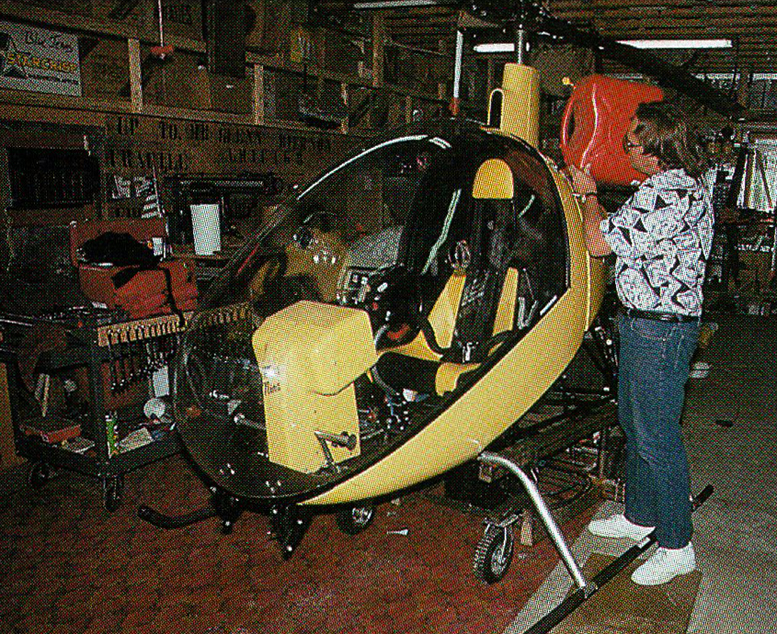
With the lathe in his skillful hands Cicare conceives three dimensionally. Everything is processed through a biological CAD-CAM; this is the Cicare technology. His experimentation isn’t finished. In my last visit to Saladillo, Mr.Cicare guided me to a dark room in his workshop, turned on the lights, and asked me what I thought. I felt a sudden sensation of excitement but this, alas; this will be the subject of another article!

A Tribute To Mr. Cicare

The Argentine journalist, Santiago Gonzalez Valdez, wrote this poem in 1974 as a heartfelt tribute to Augusto Ulderico Cicare

“We have to show to our friend but we have a so big doubt: do we have to show a technical report or do we have to write a poem, or a song, or a message? Because as it tries of metals it would seam to fasten better to the first, with formulas, calculations and analysis. But it would be unjust because it would be to vanish his natural creation, it would be to subdue his inexhaustible inspiration and his dedication”

“He wasn’t a man who learnt the formulas in the university, he was a man that as that same as Robinson Crusoe was alone, between the limit of his mind and the action: Here he is! Mind and action. Points of prop of our friend. Because of that we can’t speak about technical papers.”

“This event breaks with the classic scheme. It’s nothing else and nothing less than a man who thinks by his own. Because of this his action is a poem, but not a poem that floats in the air. It’s a poem that permanently runs out of the soul of this creature. A poem that he can touch with his fingers, a poem that goes over of his marvelous soul.”

Future Cicare concept helicopter


CREDITS

“Edison, Thomas Alva,” Microsoft® Encarta® Online Encyclopedia 2003 http://encarta.msn.com

PRINCIPLES OF HELICOPTER ENGINERING, Jacob Shapiro, Page 224.

MBB HELICOPTER NEWS, Emil Fackler, 2/86.

Letter from Rotorcraft Magazine editor Paul B. Abbott, Oct. 20, 1992.


The post Augusto Cicare – Helicopter Designs appeared first on Redback Aviation.

Evolution Of The Angel Helicopter Kit

$
0
0
Evolution of the CH-7 Angel helicopter

The Amazing CH-7 Angel Helicopter

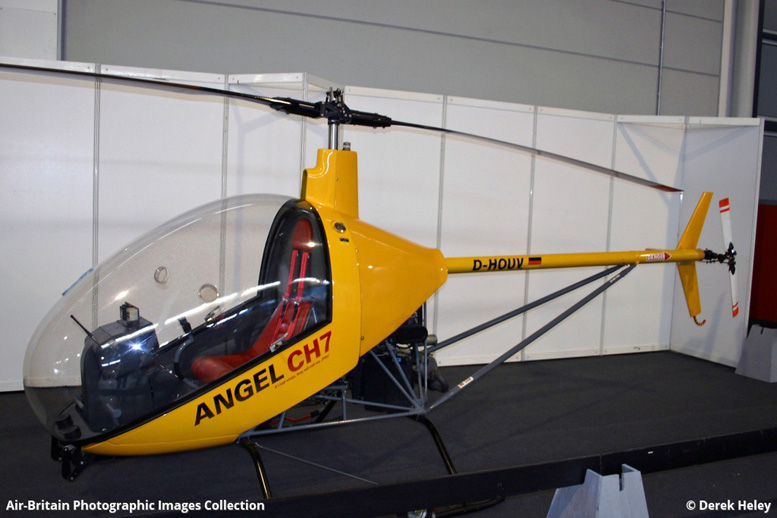
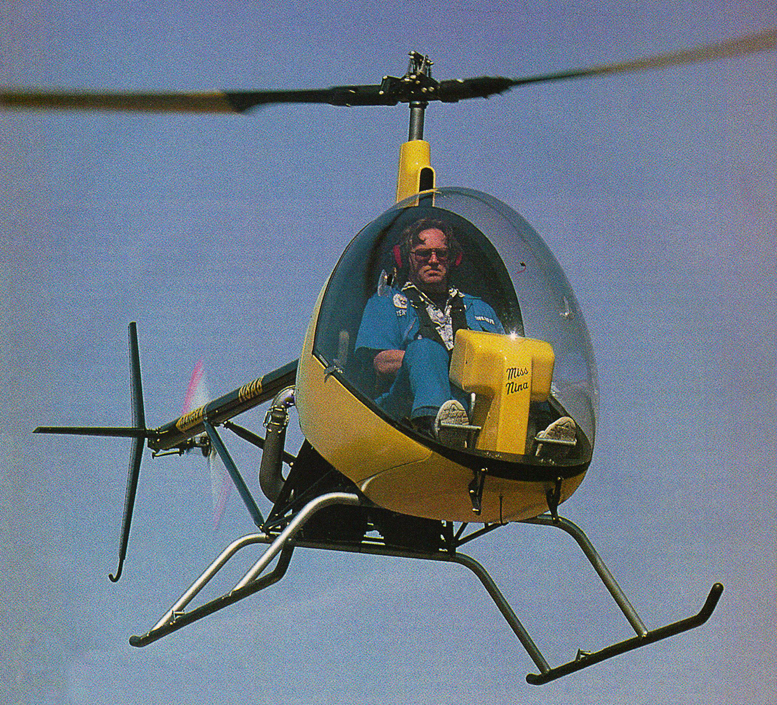
The, CH-7 Angel helicopter, was designed by Italian born Argentina citizen Augusto Cicare. The CH-7 angel is his seventh helicopter creation, hence the acronym CH-7, which stands for Cicare’s helicopter #7.

The word Angel was added to the CH-7 Helicopter by the Italian manufacture, Heli-Sport of Turin, Italy. The Heli-Sport company commissioned famous Italian automotive designer Mr. Marcello Gandini to style the cabin/cockpit for Mr. Cicare’s prototype. A few of Mr Gandini’s design credits include the Lamborghini Countache and Diablo sports cars.

Since the CH-7 flew like a little Angel, combined with the fact that Mr.Gandini previously designed the cosmetics for the Diablo (Diablo, Spanish for Devil), the manufacture decided that it only fitting to name the new aircraft the opposite of the word devil, so the name Angel was chosen.

Augusto Cicare

After 35 years of helicopter engineering, searching for an economical model, Augusto Cicare created in 1987 the CH-6 prototype, which in it’s evolutionary version CH-7 Angel Helicopter, is nowadays a milestone in helicopter history. He made his first homebuilt helicopter, a coaxial-rotor-configured craft, in 1955 at age 18. To this he added his own homebuilt power plant.

Cicare also taught himself to fly. One of his feats, the elimination of the swash plate, reduces the rotating parts in the main rotor and simplifies pilotage as much as mortify the last 50 years of helicopter engineering. To date his talented mind has created eight helicopters and one fully articulated simulator.

The Argentinian Air force funded and test flew the CH-6 with a thought of using such models for training purposes. Today the Argentinian and Brazilian Air Forces are utilizing his SVH-3 simulator for hover training which is based on the CH-7 Angel. Since 1992 he has provided licensing rights for the CH-7 Angel to Heli-Sport srl of Turin, Italy.

Barbero Brothers and Heli-Sport

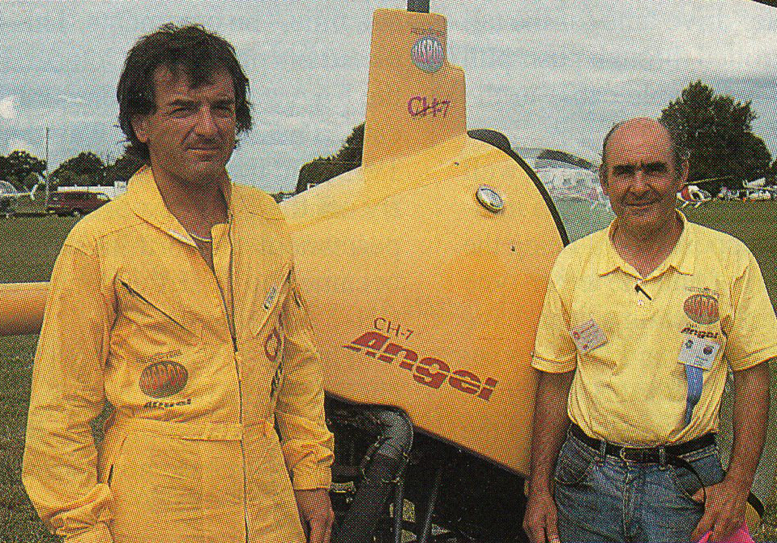
After 7 years of manufacturing and over 120 CH-7 ANGEL helicopters flying all over the world, the Barbero brothers developed in 1996/97 the CH-7 KOMPRESS project. This turbo charged dual seat Angel, is suitable for training and capable of great performance seldom attained before by piston powered helicopters.

Pier Luigi Barbero is the driving force behind development and testing having attained over 2000 hours of flight on the CH-7 type. He works hand ill hand with brother Josie, an Electrical and Mechanical Engineer in his own right, Business matters are handled by Claudio Barbero, who completes the management trio.

The CH-7 Angel Helicopter Mechanics

CH-7 Angel helicopter mechanics

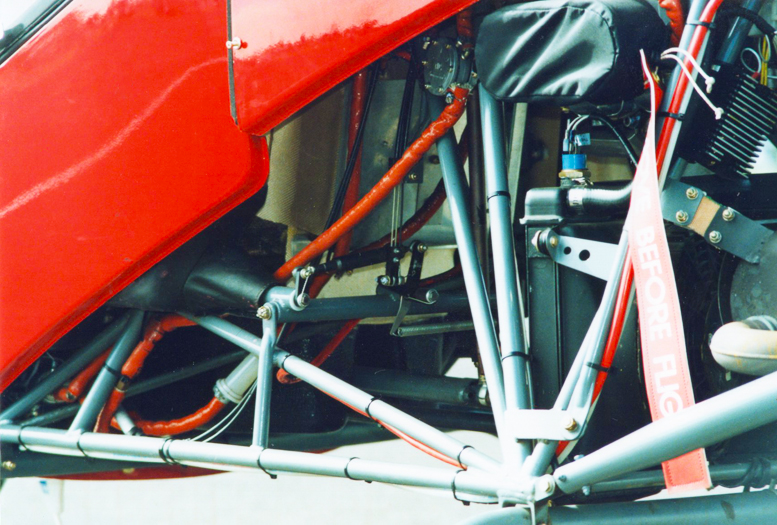
The CH-7 Angel Helicopter is a conventionally configured helicopter with a main and anti-torque tail rotor. The airframe has a welded 4130 chromoly steel structure carrying the 64-hp Rotax 582 or 115-hp 914 T engine, rotor mast, transmission, tail rotor and the skid landing gear steel down tubes. Longitudinal skids are aluminium.

Because of the joint between the landing gear and the main fuselage, the bending forces of the landing gear are NOT transmitted into the main-fuselage. An impressive feature of the CH-7 Angel Helicopter frame is the triangles that are incorporated into the construction, the triangle being one of the strongest structures.

The steel airframe incorporates a 32-psi tube pressurized system monitored by a cockpit gauge to keep tabs on the frame’s integrity. This is a safety-related system not usually found in small helicopters.

The Angel uses two off the shelf Fiat radiators plumbed in series with thermostatically controlled electric fans.

Main rotor blades are composite and are formed by winding strands of fiber filaments lengthwise around foam cores. Originally, the CH-7 Angel Helicopter had symmetrical blades, but Heli Sport has moved to an asymmetrical profile with a 6 degree twist, that has greatly improved performance. An asymmetrical airfoil is more efficient than a symmetrical air foil in that it will produce lift with a negative angle of attack. Blades are left unpainted, except for the weighted tips, to enable a see-through inspection.

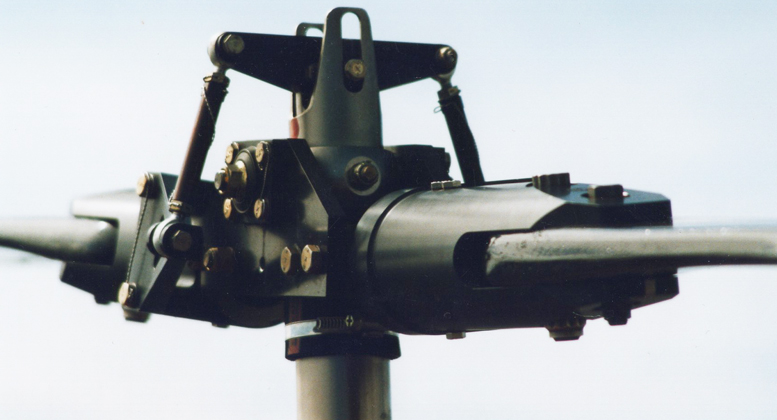
Cicare’s simplified rotor system with fewer parts features a teeter type coning rotor with a semi-rigid head. The rotor head itself is made of steel, but the bearing head housing is aluminum. Lead-lag adjustments to the blades are through eccentric bushing in 0.025-inch increments.

The head, which contains elastomeric bushing for teetering, moves through 12 degrees positive pitch at full up collective, down to 2 degrees negative for auto rotation. Heli-Sport provides a fully assembled head in the kit. The manufacturer has eliminated the swash plate and, instead uses a direct spider system.

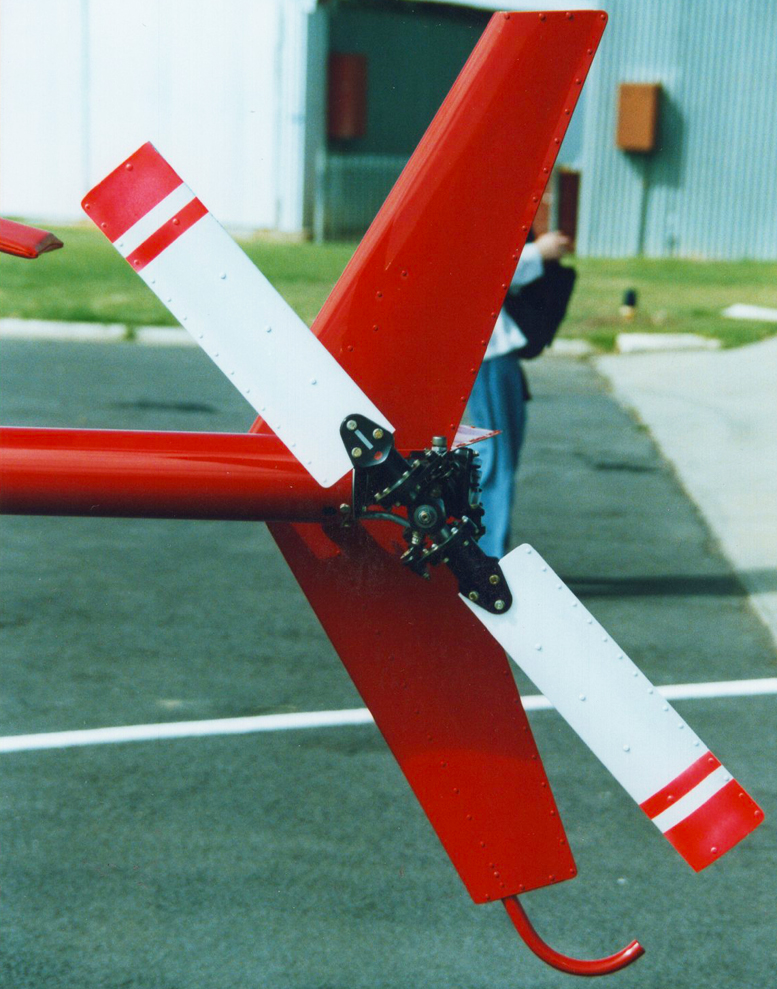
The clutch tensioning system is servo driven, an improved version of the R22 type and tensions a single five-groove, 50mm wide Goodyear wedged belt. The tail boom is an aluminium tube that carries a 32mm diameter drive shaft. Like the Robinson R22, the tail rotor pitch is controlled through push-pull tubes. The tail boom on the CH-7 Angel Helicopter is supported by an ‘A frame’ structure, and only 3 feet of tail boom protrudes beyond the support.

Cicare also went out of his way to provide well a supported tail rotor drive. It is bolstered by two midway bearings, with the only unsupported area being the 990mm between the last bearing and the teeter-type tail rotor. Its blades are all metal, contain a spar, have a NACA 63014 symmetrical airfoil, and an 8 degrees twist.

The design of cockpit is credited to Marcello Gandini, an internationally recognized Italian designer who has blueprinted numerous Italian, German and French sports cars, trucks and custom vehicles. The cockpit and canopy layout of the CH-7 Angel Helicopter give superb panoramic visibility. The canopy swings up and pivots down slightly for main rotor clearance. Inside, the cockpit has a width of 755mm, and a 6 foot pilot can be seated without his head striking the canopy.

The voyage of discovery

Turin is a bustling industrial city, home to manufacturers such as Fiat Automotive. Angel owner Dave Maree and I travelled to northwest Italy to experience first hand the legend of the Kompress.

Contained in what might have once been a rambling Italian villa is today the CH-7 Helicopter factory and assembly plant. One first encounters the showroom containing the CH-7 Angel prototype. In most respects the helicopter is almost identical to the latest deliveries of single seat Angels.

Any differences are subtle except the original aluminum symmetrical rotor blades used in the early testing phase. Interesting to note that the prototype has flown over 2000 hours and is now retired as a showpiece but is as airworthy as ever.

We received a warm welcome from Heli-sport MD Claudio Barbero. After a strong cup of “cafe”, enough to put two travel weary South African boys on the right track, it was time to visit the production area.

Rotax 582 CH7 Angel Helicopter

The first impression is usually the lasting one. The factory is spotlessly clean and tidy, We were shown racks of packed and labeled components ready for dispatch to various countries around the globe.

We start with the assembly line where many components are manufactured by contracting companies and supplied ready for assembly to Heli-Sport. Control linkages are being attached to the airframe, fuel systems are installed, power plants fitted and electrical systems connected.

We observe seasoned technicians assembling the main and tail rotor gearboxes and bench balancing tail rotor blades. Cabin moldings are trimmed for fitment and the resultant assemblies are taking the form of new flying machines.

The Angel Helicopter rotor blades are, meticulously engineered on sight. During the curing phase the blades assume their slight twist, the design of the moulds having compensated for this.

The CH-7 Angel Helicopter flight-test

We are met at the breakfast table by Pierre Luigi – chief instructor and test pilot for CH-7 Heli-sport. The day didn’t hold out much promise for flight, as the mist had settled in solidly across the farmlands. We drove in hope of a break in the weather and the highlight of the trip – to fly the CH-7 Kompress.

The training and service facility, on the outskirts of Asti, tests new aircraft freshly off the production line in Turin. Initial engine startups are under the supervision of Rotax Italy. Fuel and electric systems are monitored and blades are tracked and balanced.

Flight instruction averages one hundred hours per month on each of three dedicated training helicopters. Three instructors help to share the student load. Registered in the experimental class, the CH-7 Angel Helicopter student requires 30 hours of flight training to qualify and a farther 30 hours of solo time is required before a passenger may be taken on board.

With the instructor seated at the rear, I climb aboard and with careful foot placement, I slip into the pilot seat. As the seating is a tandem arrangement I was interested to determine whether the cabin was comfortable enough when two six foot men occupied the space. As Luigi already had his feet on the dual control pedals on either side of me I had to reach over his left leg to operate the throttle and collective lever.

The fighter-style canopy was moved up and back to seal us off from the elements. With my lap harness adjusted, Luigi proceeded to run through the start sequence. Master, magnetos, start and the 914 Turbo comes smoothly to life. After clutch engagement, she is warmed up to 50 degrees for about 2 minutes before bringing her up to 100%.We then checked both mags and the free-wheeling clutch, governor on, we’re ready for lift off.

In the hover, engine RPM is effortlessly maintained by the governor. Transition is smooth as we head for a nearby field for square bashing exercises. Hovering the CH-7 is surprisingly less demanding than the R-22.The high inertia rotor system coupled with an extremely responsive power supply makes the Kompress a forgiving machine to fly with exceptional tail rotor authority.

As we transition into forward flight with the slightest nudging of the cyclic I lift a little too much collective and we’re climbing out in a similar fashion to the Bell 205, rotor and engine rpm still at top of green. With a bit of directional guidance from Luigi we’re heading out to open farmland, the odometer comfortable at 110mph, the machine is well balanced, the cyclic smooth.

Luigi indicates towards a lush green field framed between rows of neat trees. This is our “LZ”. As we angle in setting our attitude, collective eased downward and a glance over the T’s and P’s – all in the green. Smooth transition into a hover and touchdown in the soft pasture. A few attempts at landing were needed to consistently touch down smoothly.

Angel CH-7 Kit Helicopter Review

I ask Luigi to demonstrate her power, as I watch the manifold pressure needle steadily rise to the top of green +- 35 inches as I observe the VSI push to 1500ft/ min climb. The ground falls away quickly as we pull up to the cloud base. I’m quite stunned at the performance.

In auto-rotation the cyclic control is as responsive as in powered flight. Before touchdown I raise the collective and roll power on, feeling very comfortable with the remaining inertia in the rotor. The CH-7 Angel Helicopter has high inertia blades, which is a great safety factor and the low weight contributed to the gentle descent (500fpm). I realize this is a very capable machine. Somehow I am reminded of the much larger JetRanger helicopter for power.

Our landing is neat and gentle. Cool-down takes 90 seconds to 2 minutes in two stages: first, at 75% engine rpm, then at idle. As for the seating arrangement? – I will have to return to Italy to determine whether the back seat is comfortable enough!

CH-7 Angel Helicopter Summary

For the rotor wing enthusiast who is looking for an affordable, reliable helicopter which is stylishly designed, meticulously engineered, with ample turbo performance in the form of a full assembly kit, one should seriously consider a Kompress. Heli-Sport has achieved their goal- to manufacture the best, most advanced homebuilt helicopter possible, which is designed to fly.

CH-7 Angel Helicopter Kit
Crew One
Fuselage Length 17’5"
Fuselage Width 32 1/4"
Over All Length 22’5"
Skid Width 6’4"
Max height (mast or empinage) 7’3" @ Mast
Gross Weight 792Lbs
Empty Weight 451Lbs
Useful Load 341Lbs
Tail Boom Structure Aluminum Tube, Aprox 4" dia.
Tail Boom Support A frame brace
Length of Boom Behind Support 36 inches
Tail Rotor Control Linkage Push Pull Rods & Bell Crank
Canopy Lexan, One Piece, Forward Hinging
Hours Between Overhauls 1000 hours (or on condition as fleet matures)
Air Frame Construction 4230 Chrome Molly Tubing – Pressurized with nitrogen gas to detect defects at a glance.
Max Speed (VNE) 92 MPH
Cruise Speed between 75 & 85 MPH
Best Rate of Climb Speed 1100 FPM
Max Duration Speed (best fuel economy) 68 MPH
Max Duration Time 2.5 hours (no reserve)
Max In Ground Effect Hover 7,500 feet
Max Out of Ground Effect Hover 5,500 feet
Service Ceiling 11,000 feet
CH-7 Angel Helicopter Main Rotor System
Number of Blades 2
Construction Composite, 1.5 kilo tip weight
Diameter 20 feet 3 inches
Main Rotor Air Foil Asymmetrical
Degree of Twist in Blade ? To Be Advised
Blade Chord 7 inches
Rotor RPM 520-Top of Green
Tip Speed To Be Advised
Articulation Teetering, Semi Ridged
CH-7 Angel Kit Helicopter Tail Rotor System
Number of Blades 2
Diameter 38 5/16 inches
Air Foil Symmetrical
Degree of Twist in Blade ? To Be Advised
Blade Chord 3 15/16 inches
Rotor RPM 2808-Top of Green
Tip Speed ? FPS or ? MPH
Articulation Teetering, Semi Ridged
Pre cone Angle ? degrees
CH7 Angel Kit Helicopter Factory Standard Engine – (original model)
Engine Rotax 582
Weight 86.6 Lbs
Fuel Unleaded Auto Fuel-90 octane or better
Horse Power 64.4 hp SAE @ 6500 RPMs
Max RPMs 6800
Horse Power to weight ratio 1 hp for every 7.003 Lbs for every pound of empty weight
Displacement, (cubic centimeter) 580
Number of Cylinders 2
Power Cycle 2 Cycle
Lubrication Oil Injection Pump
Ignition System Dual (two plugs per cylinder)
Cooling System Liquid/Water
Radiators 2 plumbed in series mounted in a Y across the frame under the rear of the engine
Cooling Fan Yes, 2
Type Fan Electric fans/when needed
Time Between Overhauls Rotax Recommends 500 hours, HOWEVER, Powering a helicopter EXPECT to half this Number
CH7 Angel Helicopter Power Transfer System
Rotor engagement Clutchable V-belts – Mechanical/Cable
Engine to Transmission Single-4" – 5 groove, GoodYear belt
Transmission to Tail Rotor 1 5/16" diameter aluminum drive shaft support by 2 intermediate bearings supporting the TR shaft.
CH7 Angel Helicopter Kit Factory Standard Flight Instruments
Quad Main Rotor Transmission 2 EGT, Engine Coolant Temperature s
Dual Rotor/Engine Tachometer Vertical Speed Indicator
Non Sensitive Altimeter Ground Handling Wheels
Air Speed Indicators  

The post Evolution Of The Angel Helicopter Kit appeared first on Redback Aviation.

Augusto Cicare CH7 Angel Kit Helicopter

$
0
0
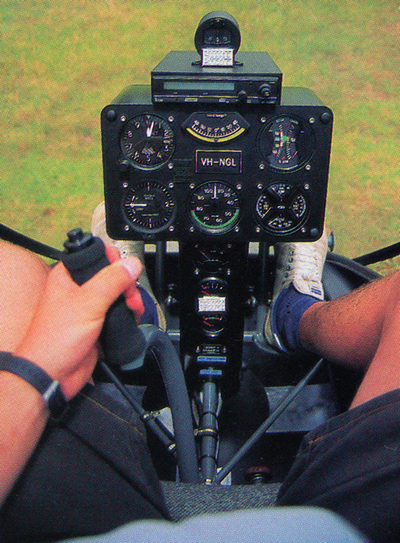
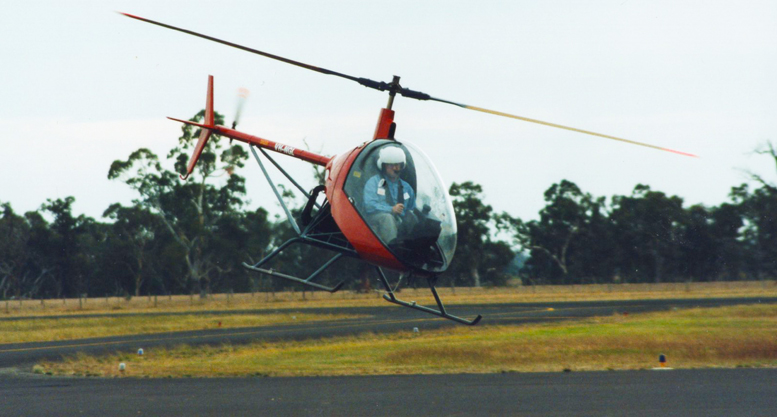
CH7 Angel helicopter cockpit

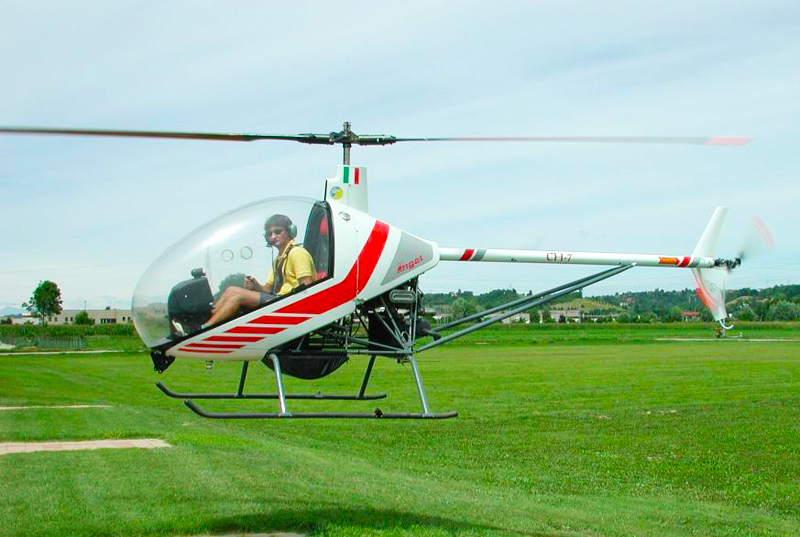
Cicare CH7 Angel Helicopter

The first CH7 Angel helicopter lands in Australia (1996)

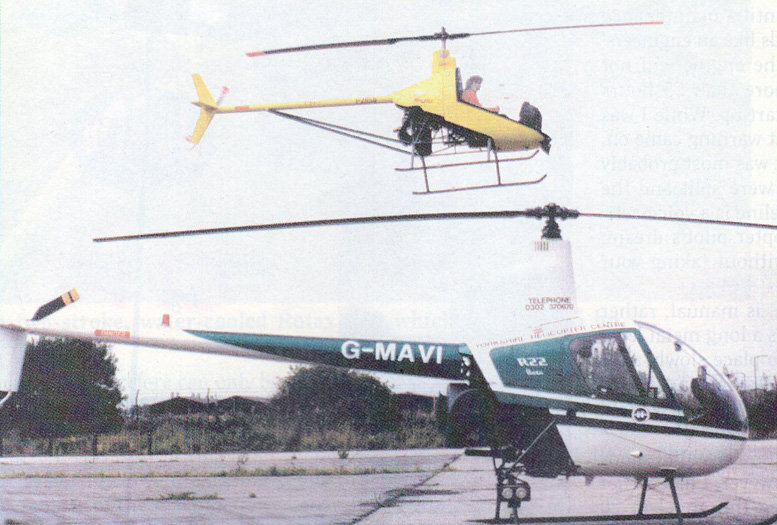
Considering a CH7 helicopter? In today’s world of high technology in aviation, the term “affordable helicopter” hardly has a place. It’s no wonder that the smallest and cheapest commercial production-built helicopter on the market, the Robinson R22, is also the highest selling helicopter in the world. Yet even the R22 will set you back over $200,000 new and this is what most would-be owners and fliers find ultimately too prohibitive.

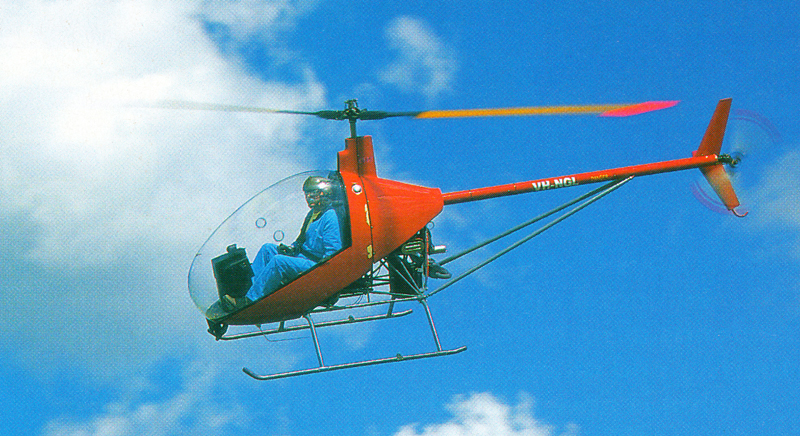
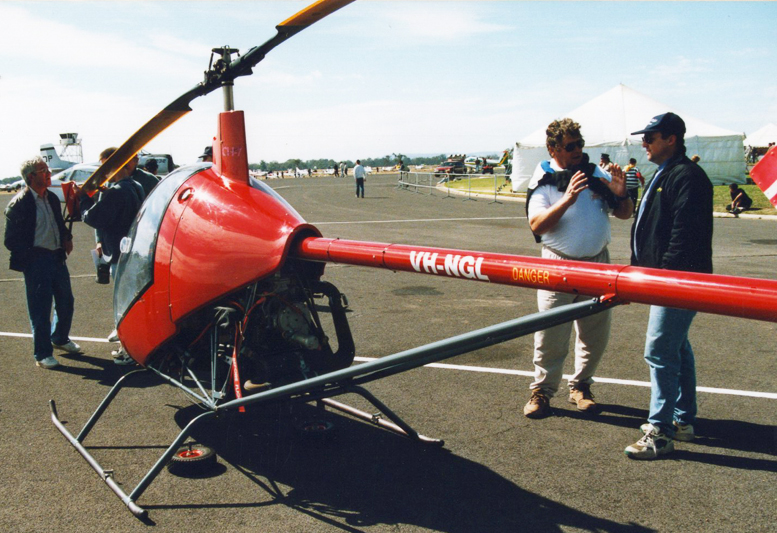
VH-NGL CH7 Angel Kit Helicopter

Australian Registered VH-NGL Helicopter

As a consequence of such excessive costs the helicopter industry is witnessing the arrival of an increasing number of new designs aimed at bringing both purchase price and operating costs down drastically. Characteristically, all of these new designs are single-seat, home-built, and run on two-stroke power.

Now whilst the merest mention of home-built aircraft causes many to turn and walk away, one of these little designs really does seem to offer some radical improvements on the standard fair in the home-built arena. It is the Italian CH7 Angel and it’s the first of its ilk to begin a test-flying program for Australian certification.

The Angel is the brainchild of Augusto Cicare, a native of Argentina with a 35-year history in helicopter design. Some of the helicopter’s components are manufactured in Italy by Elisport, with aerospace companies in Europe and the USA being subcontracted by Elisport to produce the rest. The whole package is presented to the purchaser in kit form and takes little more than 100 hours to put together.

At the time of writing there were two examples of the Angel in the country. One of them was purchased ten months ago and was nearing completion. The second aircraft is being used by its Australian distributor, Pacific Flight Systems (PFS), for type certification and demonstrations to prospective buyers. Carl Braden and John Hajje formed PFS to represent Elisport and market the Angel in Australia.

Pitch change rods are mounted inside the main rotor mast. While this system reduces drag and improves safety, it also add to it’s unique stability and reduced vibrations through the control rods.

Pacific Flight Systems spent a painstaking 18 months putting the first Angel together. “The CAA [now CASA] watched every step very closely, right down to removal of the aircraft parts from the shipping crates,” says Carl. “We acknowledge that CASA has a great responsibility in the certification process and that demands their close involvement in a project like this. They have been very helpful since the beginning and we have a good working relationship.”

When the certification process is complete the CH7 Angel will fall into the Amateur Built Rotorcraft category and will be sold in kit form. However PFS is careful to point out that the helicopter is not an ultralight and will carry ‘VH’ registration. What is instantly noticeable about the helicopter is its eye-catching styling. It is an exercise in minimalism, not only in its size, but also in the uncomplicated lines and this is no accident.

They say there’s nothing like an Italian suit and Cicare seems to have been a major exponent of this adage. Rather than cladding the Angel in something functional he contracted Marcello Gandini to do the styling. To date Gandini’s design achievements include the Lamborghini Miura, Countach and Diablo, and the Lancia Stratos.

Kit helicopters are fun to fly

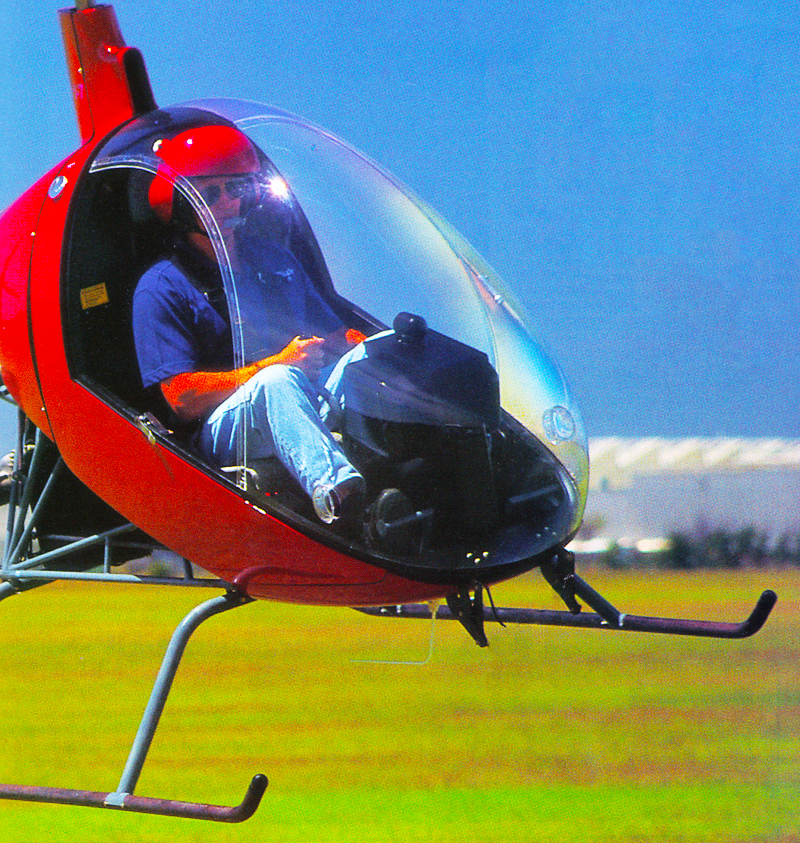
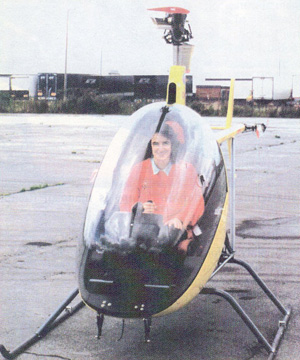
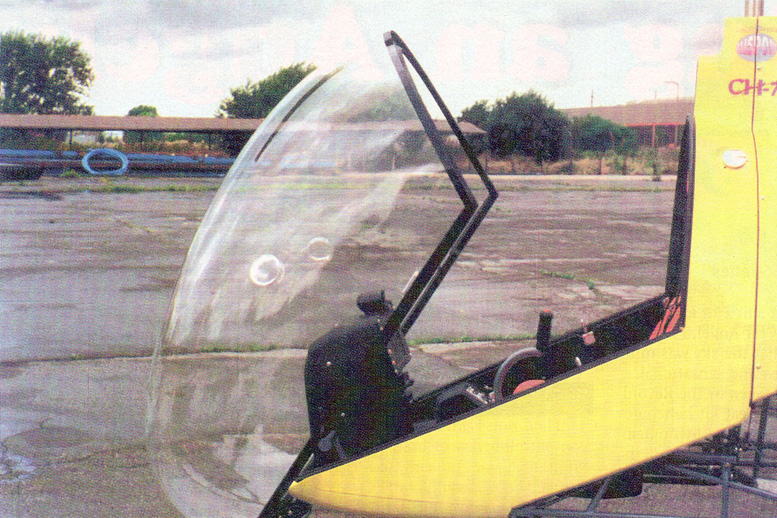
The canopy is the dominant section of the overall fuselage. Rather than obstructing the shape or compromising structural integrity with doors set into each side, the canopy is hinged at the chin of the helicopter and the whole section opens to enable entry and exit.

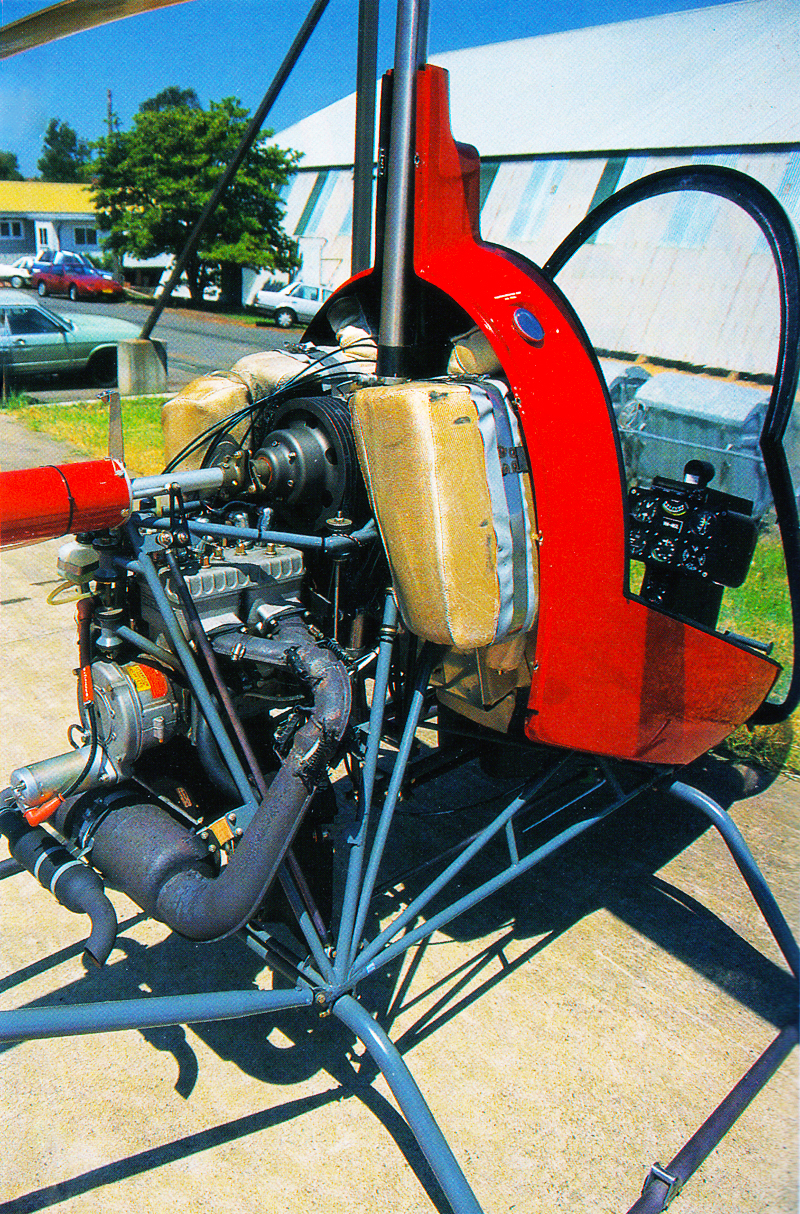
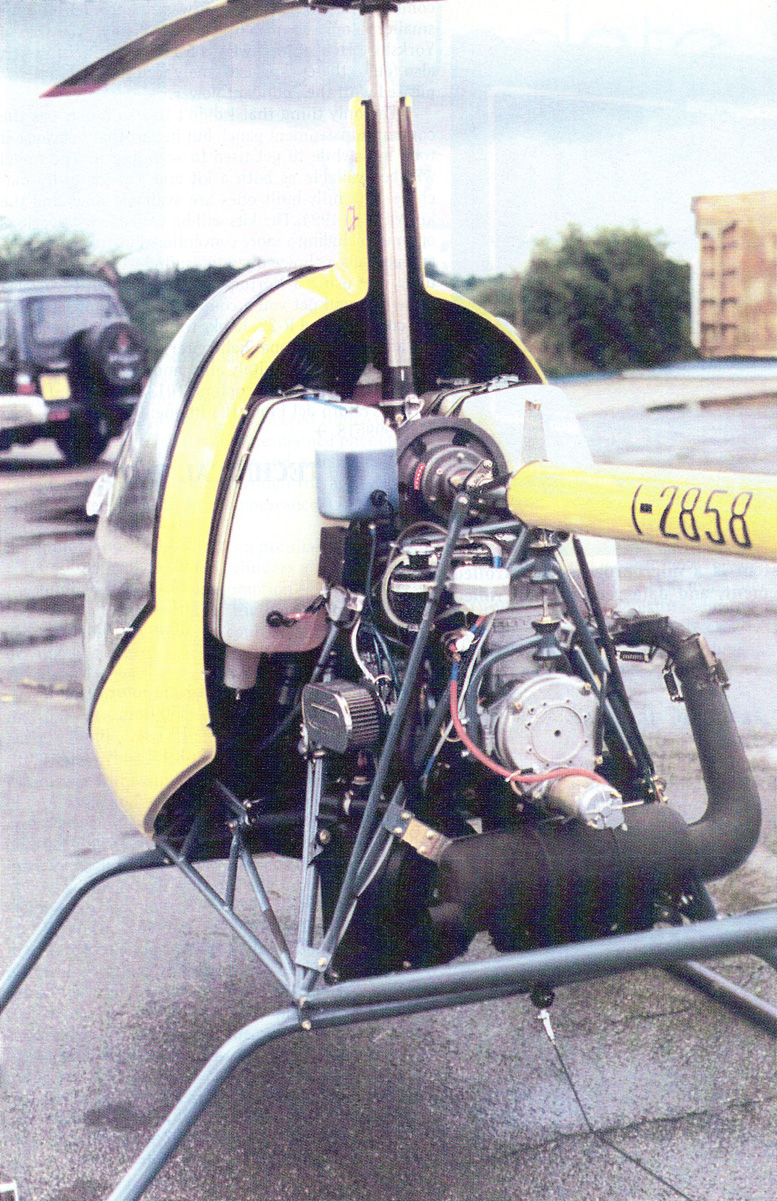
The fuselage is formed from a kevlar-based composite and the engine cowl is a single unit which can be removed in an instant to expose the engine, drive systems, fuel tanks and exhaust. The lower sections of the engine and airframe are left in the open air in the style of the R22.

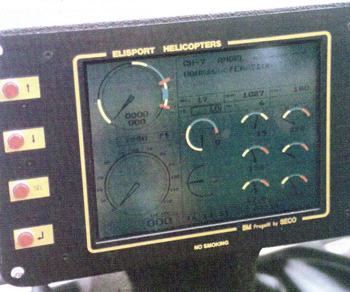
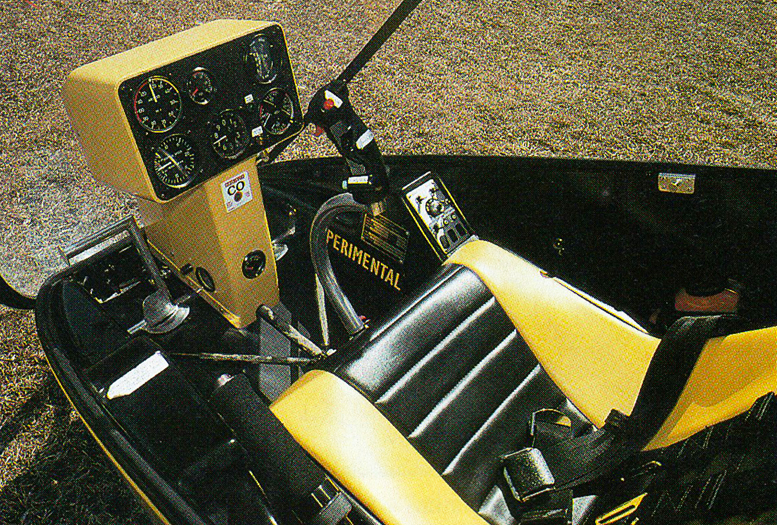
In the “hot seat” the field of vision is remarkable. Even the instrument stack, sitting between the pilot’s feet, is mounted low and well out of the way whilst remaining within easy reach. Ignition, clutch engage lever, and all switches, are located in small panels beside each knee. Ventilation in flight is provided via adjustable circular inserts mounted on each side of the canopy.

Whilst no position adjustments can be made to any of the flight controls, the layout is extremely comfortable and the seat is every bit as good as those found in any of Gandini’s other masterpieces. Standard instrumentation includes ASI, altimeter, engine and rotor RPM, VSI, temperature indicators for engine, carburetor and exhaust gas, and voltmeter.

In engineering terms there seems to have been a remarkable amount of effort put into designing the Angel and many of the major components have come from a clean sheet of paper. Cicare wanted to simplify the basic mechanics and control systems fundamental to rotary wing aircraft.

CH7 kit helicopter flying

The airframe is nitrogen-pressurised and monitored by a small gauge in the cockpit.

He started by paying close attention to the typically complex systems making up the rotor head, removing the swash plate and replacing it with his patented “Spider” system, located deep inside the airframe, beneath the mast and transmission.

Cicare claims that his Spider arrangement is safer than conventional swash plate systems through its shear simplicity. It has also been effective in minimizing vibration emanating from the head. The system links the cyclic and collective controls with the rotor system by sending the linkage arms up through the hollow rotor mast and out the top to connect with each main rotor blade.

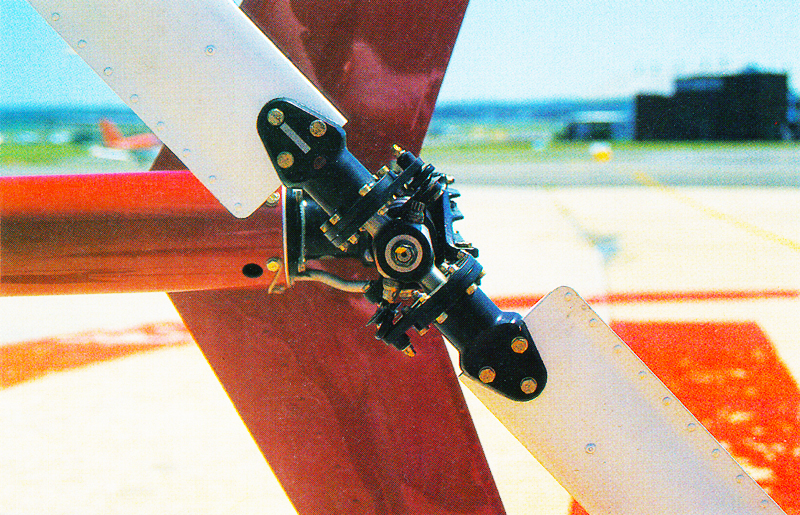
CH7 Angel helicopter tail rotor

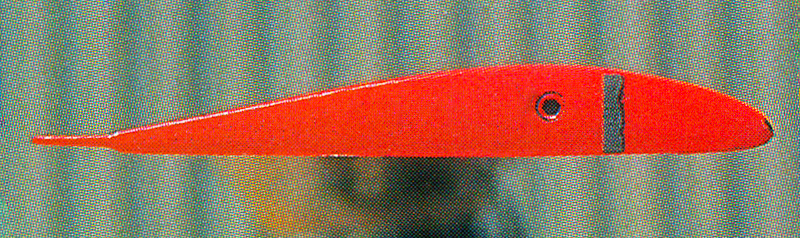
The main rotor blades are of composite construction with foam core. Each blade has a lead spar running along the leading edge and the rotor system is able to build up plenty of inertia if needed for autorotation. The blades are also asymmetric in shape, a characteristic not common to rotary wings.

The Angel’s airframe is of chrome molybdenum construction and is welded to form a continuous closed frame. A major innovation here is that the helicopter airframe is pressurized with nitrogen to enable easy checks on structural integrity.

A gauge mounted on the frame, just forward of the seat, provides an indication of the nitrogen pressure in the frame. Should the reading drop, it is likely that there is a fault somewhere in the structure. In an aircraft of this size, many pilots will surely find this a welcome safety feature.

The two-stroke, liquid-cooled Rotax 582 engine is matched well to the airframe to produce good performance figures (see data box), and the light-weight airframe makes the helicopter an agile little flyer. Bankstown-based Aero Heli Services has been contracted to work on the training side of the Angel’s introduction and Chief Pilot Steve Dines has done around six hours of flying in NGL.

“I got a big surprise on my first flight,” says Dines. “It is very easy to fly — stable and not nearly as twitchy as I’d expected. One of the real advantages in an aircraft like this is that you are right in the center of things rather than being off to one side.” This certainly adds to the ease of control.

Dines is also keen on the engineering and thought that has been put into the Angel. “The engineering is brilliant and the power-to-weight ratio is better than I thought it would be.” He is however, emphatic that the Angel is not a toy. “The size of the helicopter will probably have many people thinking that they can get right in and fly away. But the fact is that this is a real helicopter and, just like any other helicopter, it requires a significant level of skill to handle it.”

Overall, Dines is full of praise for the little Angel but did offer comment on one aspect of its cockpit. “It will possibly require some modification to make it more suited to Australian conditions, particularly if it is going to be used in a mustering role. Pilots may want more ventilation in forty degree heat and a shade panel painted in may also improve it.”

Pacific Flight Systems have anticipated such responses from pilots and are in the process of designing a canopy with large cut-outs on each side which should also enable entry and exit without having to open the entire structure. “With a few mods like these, the Angel is likely to be good in roles like mustering, stock monitoring and transport over the large areas that many properties cover.”

Asymmetric helicopter rotor blade profile CH7

Asymmetric blade profile is rare in rotary wing aircraft.

Watching the Angel perform, it is easy to see why pilots’ comments have been so positive. In fact the Angel has been demonstrated at two Australian airshows to date and, on one occasion, was one of only two aircraft able to strut its stuff in a 35 knot cross wind — an impressive performance to say the least, particularly given its size.

One caution though, the rotor system on this machine is at eye height and walking in under the spinning disc demands crouching to avoid being hit. This is an area that PFS is acutely aware of and is intending to offer high skid gear as an option to buyers. Whilst construction of the Angel is totally in the hands of the owner-builder, Pacific Flight Systems is cautious about safety issues surrounding home-built aircraft.

“The last thing we wanted to do was bring an unsafe aircraft onto the market and, while many hours have been accumulated in Angels overseas, we want to be sure that CASA is satisfied with the helicopter’s mechanical and structural integrity,” says John Hajje. “This is the main reason why we aren’t taking any deposits from potential buyers before certification is complete.”

The single seat layout in the Angel also required thought in terms of training and Hajje and Braden have worked out a good training routine with Aero Heli Services. Steve Dines has set about designing a training program for owners.

“The Angel is basically an easy helicopter to fly. It’s a very mature aircraft — all its systems are simple and robust and the engineering and design is remarkably sophisticated,” Dines says.

“The performance is very similar to the R22 and the feel of the aircraft resembles that of the Hughes 300. Pilots new to the Angel will recognize this very quickly and so it is not likely to be a quantum leap from their prior experience.” Carl Braden and John Hajje have put in a great deal of time and preparation to ensure that the Angel is well received by the aviation industry in Australia.

So far it has attracted strong interest and they have a growing data base of potential buyers. Ultimately they would be happy to achieve five sales per year but if the level of interest so far demonstrated in the Angel is any indication of the future, they may go well beyond this.

They project that the primary markets for the Angel will be in mustering and agricultural roles, as well as sport aviation. “We believe that the Angel has a big future in the agricultural sector,” says Braden. “The cost of operating Robinsons is becoming prohibitive and ultralights are too limited. We project that the Angel’s direct operating costs will be no more than $55 to $60 per flying hour.”

That, together with a comparatively low purchase price and the high level of engineering built into the machine, makes the Angel a very attractive little package. With Australian certification behind it, this helicopter is likely to be a hot item for people who use helicopters in these roles.

Rotax 582 CH7 Angel helicopter kit

Fuel tanks are covered with a fire-retardant material for added safety.

CH7 ANGEL Helicopter Specifcations
Empty Weight 451 lbs
MTOW 792 lbs
Cruise Speed 60 knots
Vertical Speed 2000 fpm
VNE 80 knots
Power Plant Rotax 582
Power 65 hp
Fuel Capacity 40 litres
Range 3 hours
Hover Ceiling (IGE) 7000 feet
Hover Ceiling (OGE) 5000 feet
Service Ceiling 11,000 feet
Price Around $85,000

COURTESY: Australian Flying – May/June 1996 – Subscribe here


The post Augusto Cicare CH7 Angel Kit Helicopter appeared first on Redback Aviation.
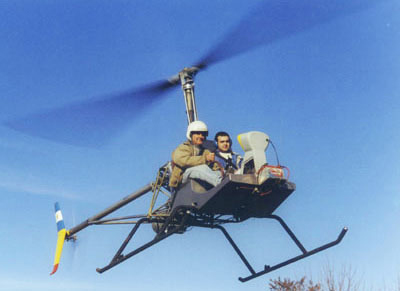
CH-7 Angel Helicopter

$
0
0
ch7 angel helicopter

The Original CH-7 Angel Helicopter By Augusto Cicare

Article Date: 1989

CH-7 ANGEL

Project: Augusto Cicare

Cabin and Blades: Designed and Produced by Marcello Gandini

Helicopter Production: Elisport

CH-7 Angel Helicopter kit

CH-7 ANGEL HELICOPTER PERFORMANCE SPECIFICATIONS

TYPE: Amateur built helicopter, ONE-SEAT

ENGINE: Rotax 532cc, 65 Horsepower, two cycle, two cylinder, dual ignitions, liquid cooled

UTILIZATION: Transport, agricultural activity, sport aviation

STRUCTURE: Steel trestle weld and aluminium tubes bolted Cabin in composite materials with wide view canopy

MAIN ROTOR: Two composite blades, semi rigid rotor system

TAIL ROTOR: Two aluminium blades

TRANSMISSION SYSTEM: Cardanic gear and transmission box oversize for higher security

CONTROL SYSTEM: “PULL-PUSH” without cables

INSTRUMENT PANEL: Air-speed indicator, altimeter, vertical speed indicator rotor/engine revolution indicator, water temperature, dual EGT, carburetor temperature, hour counter

CH-7 Angel Helicopter Specifications METRIC IMPERIAL
LENGTH 7.15 m 23 ft
HEIGHT 2.03 m 31 in
WIDTH 1.60 m 62 in
MAIN ROTOR DIAMETER 6.0 m 19 ft
TAIL ROTOR DIAMETER 1.03 m 40 in
EMPTY WEIGHT 205 kg 451 lb
MAXIMUM SPEED 140 km/h 86 mph
CRUISE SPEED 110 km/h 68 mph
VERTICAL SPEED 7 mt/s 2000 fpm
RANGE MAXIMUM 3hr /330 km 3hr /205 m
FUEL CAPACITY 40 L 10 gal
HOVER IN GROUND EFFECT 2100 m 7000 ft
HOVER OUT OF GROUND EFFECT 1500 m 5000 ft
SERVICE CEILING 3500 m 11000 ft
MAINTENANCE Every 300 hrs

The post CH-7 Angel Helicopter appeared first on Redback Aviation.


Flying The Elisport CH-7 Angel Helicopter

$
0
0
ch6 ch7 helicopter

Elisport Italia CH-7 Angel Kit Helicopter

CH-7 Angel helicopter Article Date: February 1994

Who says that the pioneering spirit in aviation is dead? When I flew the single-seat CH-7 Angel helicopter, I felt as if I were the first pilot ever to fly; that the sky was mine alone; that this was something new and sensational.

Those of you who were rather taken by the Revolution Mini 500 Rotax-powered single-seat kit helicopter will be aware that the design was inspired by Augusto Cicare’s homebuilt CH-6 – the cabinless version of the CH-7 Angel helicopter.

In fact, rather a lot of the Mini 500 promo video actually features the Cicare machine. A helicopter engineer for 35 years, Cicare has been one of the leading lights in the homebuilt helicopter movement, although not that well-known outside his field, because he works and lives in Argentina.

elisport helicopters ch7 helicopter kit design

LEFT: The blades are lightweight composite and filled with lead weights in the leading edge.
RIGHT: 46 mph is recommended for approach and normal takeoff.

Failing to come to an agreement with Revolution’s Dennis Fetters, Cicare ended up in Europe and joined forces with Elisport, who markets microlights in Italy. Elisport got to work on the CH-6, and, after a variety of modifications and improvements, it became the CH-7.

EDITOR: It wasn’t too surprising that in the United States, the Mini 500 got huge media coverage looking much like the Vietnam era “Hughes 500 LOACH”. It was also significantly cheaper – not always a good sign of a design (with the exception of today’s Mosquito Kit Helicopter). The Mini-500 struggled with endless issues!

They then commissioned Marcello Gandini to style the CH-7. Who? Well, have you ever drooled over a Lamborghini Contach or Diablo? He was responsible for the looks. Anyway, although Cicare is no longer involved in the CH7 Angel, he still works with Elisport and is building a two-seat training model.

elisport helicopters digital instrument panel

The Flight Manager Computer System is a microprocessor-controlled instrument panel, systems management, and data recorder, all rolled into one.

Not surprisingly, the specification and design of the Mini 500 and the CH-7 Angel helicopter is very similar-with a 4130 steel tube airframe, an alloy tube tail boom, and a 65 hp Rotax 582 engine providing the power.

The “fuselage” is a simple fiberglass fairing. The airframe is filled with an inert gas, and a pressure-gauge sits on the floor of the cockpit: this will give the first indication of any cracks in the airframe.

This is not a new idea: it is used in various aerobatic aircraft, such as the Lazer and several models of Zlin, but clearly it is an important safety factor for any aircraft. There is a bubble canopy of flexible plastic which changes shape in flight!

This is another safety factor, as it will not shatter (on impact with a bird, for instance). The only disadvantage is a slight distorted view of the ground as you come into land, but there was no false height sensation, only that of being inside a fish bowl.

I found the outlook more comical than dangerous. The blades are a lightweight composite filled with lead weights in the leading edge. This gives them controllability, strength, and high inertia. The rotor system is semi-rigid with a teetering head.

The manufacturers got rid of the swashplate and instead use a direct spider system, which they describe in their brochure as “humiliating all previous helicopter engineers” (Sikorsky, lie down and die!). Certainly it reduces the rotating parts of the main rotor which, as Robinson discovered earlier, makes for less engineering and cheaper costs.

compact comfortable kit helicopter

The Angel’s cockpit is extremely well laid out and comfortable.

The engine is a two-stroke, water-cooled Rotax 582—the type usually utilized in ultralights although the CH-7 Angel helicopter has an extra cooling fan. It delivers 65 hp and has a dual-ignition system. In the cockpit, you have a strange mixture of highly modern and less sophisticated technology. The instrument panel is now a digital/analogue computer controlled module.

The “Flight I Manager Computer System”, or FMCS for short, is a microprocessor-controlled instrument panel, systems management, and data recorder, all rolled into one. It has (as of yet) no back-up system and so far they have never had a serious problem; however, they are considering this possibility.

Before you can start up the CH-7 Angel helicopter, you are required to enter the pilot’s weight and the current dewpoint. It will then warn you not to attempt any landings above a certain altitude, as well as alert you when induction icing conditions are possible or actual.

It will display the information you normally require in the format you want it (i.e., airspeed in mph, kt, or km/h) as well as highlight out-of-parameter information: if the water temp gets too high, or the rotor rpm too low, it will sound a horn.

Meanwhile, the FMCS also records high and low values of all parameters, as well as all out-of-parameter readings which will be checked during a 50-hour service. At 50 hours, the computer gives a warning that a check is needed.

angel helicopter plexiglass cabin

In order to prevent shattering, the bubble canopy is made of flexible plastic and changes shape in flight!

At 55 hours, if the warning has been ignored, the CH-7 Angel helicopter engine will not start until a maintenance engineer re-sets the computer. Sounds like an engineers’ dream! Elisport is adamant that the engine will not stop in the air. If you try to go more than 55 hours between services, it won’t let you start up.

While I was doing an autorotation the engine out warning came on, (which gave me rather a shock!) but was most probably just pointing out that the needles were split and the transmission disengaged. In the pipeline is a voice-activated version. Now there’s a helicopter pilot’s dream: being able to reset the altimeter without taking your hands off the controls.

The CH-7 Angel helicopter clutch system, in contrast, is manual, rather like the Schweitzer H300. It involves a long metal lever in the cockpit, which you work into place slowly after starting the engine; once the blades are moving ’round and the needles are joined, the clutch lever is secured under a piece of green plastic.

I flew the Angel in ideal conditions a beautiful sunny day with about 10 knots of wind. However, I had earlier witnessed a low-time PPL(H), flying the Angel in 20 knots of wind without apparent difficulty. Elisport does recommend staying out of heavy rain or snow…

Start up was simple and fairly standard: there is a checklist with all the normal checks and percentages that a Robinson pilot is used to. On lift-off, the major difference for a Robinson pilot is that, although the company claims there is a correlator on the throttle.

The CH-7 Angel helicopter correlator doesn’t seem to work very well and lifting the collective is accompanied by a huge drop in rotor revs. Strangely, however, this was very easy to deal with and became instinctive in a matter of seconds, so I didn’t feel that was actually any disadvantage.

The first thing I noticed on takeoff was that the helicopter was skittish. This was due to the low-slung blades which give it a larger ground cushion combined with the low weight of the machine, (max is 792 lbs).

two stroke water cooled Rotax 582 helicopter

The engine is a two-stroke, water-cooled Rotax 582 which provides 65 hp.

This skittishness is, however, easily overcome and, once established in the hover, there is suddenly a feeling of intense elation: not only are you flying a single-seat helicopter, and therefore can only be shown so much by another pilot, but the Angel itself is a remarkably inspiring aircraft; you can almost believe that you are flying a Lamborghini (without the price tag, of course!).

This is surprising in an aircraft that cruises at 85 mph (74 knots) but I believe the feeling is due to the sensitivity and maneuverability of the machine rather than the speed.

Turns on the spot, left, right, and in a backwards motion were easy and controllable. Like the R22, it has an anti-clockwise rotating main rotor but has less tendency to run away to the right. This is because the small engine produces less torque.

I took off and climbed at 41 mph (36 knots)—the manufacturer’s recommendation for maximum rate of climb. Climb is excellent, a good 1500 feet per minute with only 70% power; at first I found it hard to monitor the instruments, but that did click into place after a few minutes of flying.

In this helicopter, manifold pressure is marked in percentages, not in inches, but for those used to inches, there is a clear yellow, green and red line which makes the power limitations very obvious.

Angel CH 7 kit helicopter two stroke powered

The one reservation I have is that the manifold pressure gauge is very small, the same size as the temperature and pressure gauges, and, therefore, not as striking as the one in the R22. However, no one else who has flown the Angel found this a significant disadvantage and, again, it doesn’t take long to get used to the difference.

Turns and steep turns also take a little while to pin-down because the large bubble has no reference points on which to place the horizon. Once again, after a few steep dives towards the ground, I sorted out this problem and as various aircraft and helicopters appeared in the local area, I began to value the extremely good unrestricted all-round view.

I tried to get myself into Vortex ring without success; this was almost certainly because of the wealth of power available compared to weight. Flying straight and level needed only 50% power and even in the climb I was only using 70%.

However, I am only just over the minimum pilot weight, (50 kgs or 110 lbs) and a heavier pilot might be able to get himself into vortex ring. Instead, I hovered out of ground effect at several different heights and felt perfectly happy and safe. Autorotation at 45 mph (39 knots) was smooth, light, and slow.

ch7 helicopter robinson r22 helicopter

Small in comparison, yes: but you feel like you’re flying a Lamborghini – but without the price tag!

It was impossible to get the rotor revs to drop low, even by lifting the lever high in the cockpit. The Angel does have high inertia blades, which is a great safety factor and the low weight contributed to the gentle descent.

I needed very little right pedal in the autorotation, again due to the small amount of torque, and recovery was quick, easy, and safe. One pilot reported that there is enough energy in the rotor system at 100% rpm to shut the engine down on the ground, lift into a hover, do a spot 180-degree turn and set down before things get marginal.

Approach, like normal takeoff, is recommended at 46 mph (40 knots) and although I tried various other speeds, this did seem to be the one most likely to give an easy descent. I did several steep approaches with hard round-off and was impressed by the amount of power available and the ease of pedal recovery.

A few attempts at landing were needed to consistently touch down smoothly. This is because of the buoyant and effective ground cushion and the light weight of the helicopter. Once on the ground shut-down was a normal, straight-forward procedure.

The CH-7 Angel helicopter can still be flown without the front bubble (like the prototype) although that brings VNE down from 92 mph (80 knots) indicated airspeed to 60 mph (52 knots). I loved flying the Angel. I liked the sensitivity of the controls but found it less twitchy than other ultralight helicopters I have flown.

I felt completely at ease and in control very quickly, and realized I had hefty surplus of power available. Endurance is over two hours and, since the seat is lined with foam that molds to your shape, I thought I could fly for that length of time and still be comfortable.

Flying The Elisport CH-7 Angel Helicopter prototype

I wondered if this was a helicopter built for smaller people (I am 5’6″) but Geoff Day, (the CFI of Yorkshire Helicopters) who is 5’11” and rather heavier, also found the cockpit extremely well laid out and was pleased with the abundant power.

The only thing that I didn’t like so much was the CH-7 Angel helicopter computer instrument panel, but in part that’s because it took me awhile to get used to scanning it. The Angel will be available as both a kit and a ready-to-fly machine.

The fully-built ones are available now, and the kits early in 1994. The CH-7 Angel helicopter kits will be available with various options, including a more conventional instrument panel, and perhaps a choice of engines: flight tests are already underway using a Norton twin-rotary engine.

All at a price that will get you a couple of Angels for less than the cost of a used R-22. Looks from here that the age of the affordable personal helicopter has arrived. The pioneering spirit is definitely alive and well!

FMI: Elisport Helicopters, 10132 TORINO, ITALY


EDITOR: Over the years I have seen custom installations of the Jabiru 2200, Turbine engines, Norton Rotarys and eventually, the Rotax 912/914 series of aircraft engines which is still current. Each performing to the individual needs of the pilots who chose them. Now the Rotax four strokes seem to cover all bases.

Special credit to Glen Ryersen for his enthusiastic one-man promotion of his Angel Helicopter Miss Nina in the USA.

ANGEL CH-7 HELICOPTER TECHNICAL DATA
Height 81 inches (2.08m)
Length 23 feet (7.15m)
Width 62 inches (1.60m)
Height of skids 14 inches (0.36m)
Height of cabin 61 inches (1.54m)
Inside width 30 in (0.76m)
Main rotor
Type Two composite blades, semi-rigid rotor system
Nominal operating range 550 Rpm
Rotor diameter 19.7 ft (6m)
Rotor disc area 304.2 sq ft (28.26sqm)
Tail rotor
Type Two metal blades
Rotor diameter 3.38 ft (1.03m)
Airframe
Type Welded steel 4130 tube frame
Tail Aluminum alloy tailboom
Landing Gear Aluminum alloy landing skids
Rotax 582 Engine
Power 65 Hp
Displacement 600 cc
Fuel capacity 10.57 US gallons
Weights
Empty weight 451 lbs (205kg)
Max all up weight 792 lbs (360kgs)
Minimum pilot weight 110 lbs (50kgs)
Performance
VNE 92 mph (149 Km/hr)
Cruise speed 85 mph (136 Km/hr)
Max range speed 70 mph (113 Km/hr)
Autorotation 45 mph (72 Km/hr)
Rate of climb 1900fpm (l0m/sec)
Hovering ceiling ige 7000ft (2100m)
Hovering ceiling oge 5000ft (1500m)
Service ceiling 11,000ft (3500m)
Maximum range 205stm (330 km)
Endurance 3 hours
X-wind limit 17 mph

The post Flying The Elisport CH-7 Angel Helicopter appeared first on Redback Aviation.

Miss Nina Is An Angel

$
0
0
miss nina ch7 helicopter

Kit Built Angel Helicopter

ARTICLE DATE: February 1997

This pilot takes it to the bank in his Italian single-seater

“In the 1950s, when I was a kid in Hawaii, my dad was a warrant officer in the Navy. I saw an Army Bell H-13 helicopter land on the beach, and that turned me on to aviation,” says Glenn Ryerson of Stroudsburg, Pennsylvania.

“Also watching Sky King and Whirly Birds television programs added fuel to the fire, so while in high school I worked as a lineboy at the Mt. Pocono Airport (now East Stroudsburg Airport) after school and on the weekends for more than two years. This led to obtaining a private ticket during the same period.”

Ryerson, now 46, also acquired his glider rating in Germany while serving as an Army aerial photogra­pher, and later he became interested in hot air balloons through the efforts of friend and balloonist Jim Naiz- by Ryerson then earned a commercial hot air bal­loon rating and purchased an 88,000-cubic-foot Head AX8 balloon, which he flew for 10 years.

ch7 helicopter designers

Designer Augusto Cicare (right) and Elisport President Pier Luigi Barbero show off the CH-7 prototype.

He also made friends with Bob Strenz, a Robinson R-22 helicopter dealer at East Stroudsburg, became a helicopter student pilot, and added a rotary wing (heli­copter) rating in 1990. “Strenz later showed me a brochure on the little sin­gle-seat Italian kitbuilt CH-7 Angel helicopter,” Ryer­son says, “and we decided to take a trip over to the Elisport factory in Turin, Italy, in November, 1992.”

“There we met Augusto Cicare, the Angel designer, Elisport President Pier Luigi Barbero, and his three sons, who without further ado, generously permitted me to fly the third prototype Angel. I now felt that fly­ing fixed-wing aircraft was rather boring compared to helicopters, and once I was at the controls of the Angel, I got real serious about it.”

“But I wasn’t keen on obtaining an early kit as I heard that there is a learning period in developing and producing kits. This resulted in my purchasing the 60th kit in July, 1994, after sale of my balloon and mortgaging my house to pay the $33,000 price.”

Meet an Angel

Before we go farther, here is some background on the Angel helicopter. It is officially designated CH-7, or Cicare Helicopter 7, actually the seventh single-seat helicopter design by Italian born Argentina citizen Cicare of Buenos Aires. He made his first homebuilt helicopter, a coaxial-rotor-configured craft, in 1955 at age 18.

Lack of materials, parts and funds required Cicare to scrounge and innovate, even to building his own power plant. He also taught himself to fly, and although some of his projects were overbuilt due to lack of proper materials, each subsequent CH model was an improvement.

For a short period, the Argentine Air Force funded and test flew the CH-6 with a thought of using such models for training and agricultural purposes. Dennis Fetters’ present Mini 500, being produced in kit form by his Revolution Helicopter Corporation, is a devel­oped version of the Cicare CH-6.

Miss Nina Glenn Ryerson ch-7 helicopter

Cicare’s association with Revolution Helicopter was terminated, and since 1992, he has provided licensing rights for his newer CH-7 Angel to Elisport and its Aerosport distributorship, which also handles the Avid Aircraft series of kits in Italy.

Cicare is currently tweaking a new twin-engine, two-place heli­copter in Argentina, and he is said to be marketing a helicopter simulator, designated SVH-3, in South America. Regarding the CH-7, Ryerson believes that Cicare has pretty much accomplished his goals, which were to develop a small, affordable, quick-to-assemble kit helicopter.

The Mechanics

rotax 582 helicopter engine

Quick removal of the engine fairing reveals the CH-7’s Rotax 582 two- stroke, liquid-cooled engine.

The Angel is a conventionally configured helicopter with a main and anti-torque tail rotors. The airframe has a welded 4130 chromoly steel structure carrying the 64-hp Rotax 582 engine, rotor mast, transmission, tail rotor and the skid landing gear steel down tubes. Longitudinal skids are aluminum of 76- inch length with a 62-inch tread.

The steel airframe incorporates a 32-psi tube pressurization system monitored by a cockpit gauge to keep tabs on the frame’s integrity. This is a safety-related system not usually found in small helicopters.

Main rotor blades are composite and formed by winding strands of pencil-thickness filaments length­ wise around foam cores. Originally, the CH-7 helicopter had symmetrical blades, but Elisport has since gone to an asymmetrical profile with a 6° twist that are said to have improved performance. Blades are left unpaint­ed, except for the 3.3-pound weighted tips, to enable a see-through inspection. Rotor diameter has also been increased from 19 to 20 feet.

Cicare also developed a simplified rotor system with fewer parts than is normal. It features a teeter-type coning rotor with a semi-rigid head. The rotor head itself is steel, but the bearing head housing is said to be aluminum.

Lead-lag adjustment to the blades is through eccentric bushings in 0.025-inch increments. The head, which contains elastomeric bushings for teetering, moves through 12° positive pitch at full up collective, down to 2° negative for autorotation. Elisport pro­vides a fully assembled head in the kit.

fueling kit helicopter ch7

Preparing for a flight to the bank, Ryerson refuels Miss Nina in his workshop/garage – hangar.

Ryerson comments, “Cicare has eliminated the oscillating swash­ plate found in numerous helicopters, employing instead a stationary swashplate under the transmission, thus eliminating a lot of parts.”

A five-belt reduction drive was initially used, but the system now features a single five-groove, 2-inch-wide belt developed for the Angel by Goodyear. Another method of cost-cutting and simplification is the supply of what Ryerson calls giant rubber bands (cut from auto tire inner tubes) as the return springs on the clutch system. Clutch actuation is through a lever on the right side of the cockpit.

kit helicopter rotorhead

The tail boom is a 4-inch-diameter aluminum tube that carries a 1.25-inch-diameter drive tube for the tail rotor, with tail rotor pitch controlled through push-pull tubes. A clutch engage cable is the sole cable in the helicopter.

Cicare also went out of his way to provide a well supported tail rotor drive. It is bolstered by two mid­ way bearings, with the only unsupported area being the 39 inches between the last bearing and the teeter-type tail rotor.

Its blades are all metal, contain a spar, have a NACA 63014 symmetrical airfoil, and an 8° twist. Tail rotor diameter is 40 inches, chord 3.8 inches. The vertical stabilizer has a height of 40 inches, and the horizontal stab spans 16.25 inches.

Design and construction technique of the main rotor blades and cockpit are credited to Marcello Gandini. He has an international design consulting organization in Italy that has blueprinted numerous Italian, German and French sports cars, trucks and custom vehicles for the manufacturers. Gandini is also aviation oriented and has been involved with motor gliders, but the Angel is his first rotary-wing project.

kit helicopter tail rotor

The cockpit is nicely enclosed with a wide-vision bubble canopy that swings up and pivots down slightly for main rotor clearance. Inside, the cockpit has a width of 29.75 inches, and Ryerson reports that a 6 foot 4 inch pilot can be seated without his head striking the canopy. The leather covered seat is not adjustable and is formed with fiberglass over a metal frame that is integral with the airframe. A small bag of tools can be carried under the seat.

Building One

After getting his kit in mid-’94, Ryerson assembled it in a former RANS dealer hangar at East Stroudsburg in about 200 hours over a three-month period “with some physical and mental support from friends Cliff Haley and Emil Rolando,” he says, adding that “A major difficulty was the final balancing of the rotor sys­tem. I had never even built models as a kid, and since this was a delicate procedure, I had Ron Froberg, a heli­copter pilot and A&P mechanic, check my work. Then a rep from the Chadwick Helmuth Company double­ checked it.”

Ryerson owns and operates a seasonal fast food and ice cream business in nearby Scotrun, and since he started work on the Angel during his busy season, aircraft activities suffered. “I could only devote 2 hours a day to the helicopter, and sometimes an hour at a time,” he comments.

This first-time builder com­pleted his project on October 13, 1994, at which time the FAA gave him a temporary airworthiness certifi­cate. The first flight was delayed until March 10, 1995, and it took until October 20 that year for him to fly off the FAA-required 40 hours and apply for the permanent airworthiness certificate.

Glenn Ryerson helicopter

Using the electric dolly that he built, Ryerson escorts his CH- 7 from home to heliport.

Ryerson thus became the first builder to complete and license a CH-7 Angel in the U.S. The kit comes without an engine, and the purchaser can opt not to include the fiberglass cockpit area enclosure and instruments. Ryerson recommends that a builder purchase his instruments in the U.S. for cost savings.

Ryerson has equipped his cockpit with a fighter­ type Infinity Aero stick grip with a starter switch on top. “If you lose the engine and are in autorotation, its nice to have the starter switch at your finger tip to attempt a restart,” he says. A voltmeter and water pressure gauge have been added to the panel. The location of the fuel gauges behind the pilot is not to Ryerson’s liking, so he plans to install a low fuel warning light, as well as an engine two-stroke oil warning system.

Elisport originally included an electronic flight recorder as standard in the kit, but according to Ryer­son, it became an option and was later eliminated. “Because of its complexity, you have to be a computer whiz to install it,” he said.

The Cost

Ryerson’s original $32,000 price for his Angel has now reached $41,000, and he is not finished with fitting out Miss Nina. As funds warrant, he plans to add a radio and compass, as well as a hard hat for himself. Ryerson is the U.S. dealer for Elisport but notes that he has not sold any.

The CH-7 kit price is a problem, he says, compared to the American-made Revolution Helicopter Mini 500. The Mini 500 kit price has recently been lowered to $26,500 including a Rotax 582 engine and instruments. The CH-7 kit price also does not include shipping from Italy and U.S. customs fees.

Living with an Angel

Miss Nina was named after Ryerson’s cat, but the name is also the right size to place in the small avail­ able area. The helicopter is kept at home in a two-car garage “…as a helicopter should be,” Ryerson adds. However, his 8.5-acre property is covered with trees, and being an environmentalist, he has not cleared a helipad area.

Fortunately, about a half mile down the rural road there is a farm with aviation-oriented owners who are permitting him to use an area. To move the heli­copter between his garage and the operating site, Ryerson designed a steerable dolly that incorporates the battery pack from an electric wheelchair. It is also fitted with a tall pole carrying flashing red lights to warn approaching cars.

Flying to the Bank

Here are some of Glenn Ryerson’s thoughts about “flying with an Angel,” as he describes it. There are two categories of aviation lovers, he says: people with free time but without enough money to own an aircraft; and the second group, those who own an air­ craft, but because of a busy schedule, do not have enough time to use it.

“Wanting to be self-employed,” he says, “I chose the ice cream business with the idea of working hard in the summers and then playing hard in the off season. I am pressed for free time in warm weather, but I rationalize a flight by using Miss Nina to make my business’s bank deposits. In fact, I seem to allow my deposits to pile up, just to deepen my excuse to fly to the bank. The flight also requires a 45-minute earlier start than if I were to drive to the bank.”

After walking to my garage/hangar and checking all of Miss Nina’s fluid levels, I secure her to the electric dolly for the walk down the road to Carl and Verdin Rustine’s farm: my heliport.

“There I remove the dolly and complete my pre­ flight. It takes about 20 minutes from leaving the garage to strapping myself into the four-point hitch. The pilot’s operating handbook says one should engage the main rotor as soon as practical to eliminate a flat wear spot in the inner side of the belt, which I do after starting the Rotax and ironing out any kinks.

The Angel’s engage system/clutch is similar to the clutch on the Hughes/Schweizer 269 and 300, although theirs has an electrically engaged clutch, and mine is mechanically actuated by cable. This being the case, one must engage the clutch slowly by bumping it into the fully engaged position so as not to stall the engine while matching speeds.

kit-helicopter control system

“After full engagement, I warm Nina up to 50°C for about 2 minutes before bringing her up to 100% and then check both mags and the free-wheeling clutch. During the initial liftoff, you must remember to decrease the throttle when raising the collective to keep the rotor/engine from over speeding. I always hover a short time with the tail in the sun, when wind conditions permit, and often do a hover rotation or two as a final check.”

“Hovering the CH-7 is surprisingly less demanding than the R-22. Initially, I was somewhat concerned, as it seemed that because of the light weight of the Angel (451 pounds), the CH-7 should be more squirrelly than the 950-pound R-22.1 was totally wrong.”

“I am a firm believer in the height/velocity-dead-man’s-curve, so takeoffs are in an airplane-type run when possible. After pickup, I hover off to the down­ wind end of the 15-acre field, and before my takeoff, I conduct checks of all gauges in the green, check fuel, canopy locked, check for traffic, say a few words to myself, and off I go.”

“I’m not a lover of two-stroke engines in general, and even more so in a helicopter. With a two-stroke engine, one must keep the revs up to the top of the green during low-load conditions to maintain airspeed over the blades, particular throughout run-up and descents.”

“There­ fore, all my flights are not only VFR, but also IFF (I follow fields) in case the Rotax warning disclosed in the engine operator’s manual comes true. The manual starts out with the word DANGER in bold print and that this engine, by its design, is subject to sudden stoppage! Engine stoppage can result in crash landings. Such landings can lead to bodily injury, or death.” EDITOR: See “Mini 500 helicopter”.

“The manual goes on to other warnings relative to operating locations, airspeed, altitude and other cir­cumstances facing an aircraft equipped with a two-stroke Rotax, so I go out of my way to always fly VFR-IFF. After clearing the ground toward the end of the field, I circle my takeoff area a couple of times to gain altitude before heading over the trees. I climb to about 700 feet before moving toward a string of fields that lead to Interstate 80”.

“The helicopter climbs effort­lessly at 700 fpm at 60 mph. At about 1000 feet agl, I level off, at which time I am turning east and fol­ lowing the Interstate. The area alongside makes a perfect landing zone in an emergency. My parkway exit is the next set of old farm fields that lead to the rural branch of the Palmerton Bank at Sciota”.

nimble helicopter

“I have been cruising at about 85 mph for close to 10 minutes, but now it’s time for descent, so I swoop down to a four-lane 1-80 feeder road and toward the bank. The Rotax revs must be kept up close to its 6300 rpm red-line during descent, because exhaust gas temperature (EGT) rises due to the lean fuel/air mixture required in a low-power situation”.

“This becomes even more noticeable in a left hand descent where even less power is needed. Descending takes the greater majority of load off the engine because the main rotor begins to gain some of its energy from the relative wind ascending through the blades. Under these low-load/high-rpm conditions, EGT rises in all two-stroke engines, and if not dealt with it can cause immediate piston seizures. If I see the EGT too close to the red-line, I add a little throttle and pull more pitch”.

“This may cause me to overshoot my intended grass field touchdown spot behind the bank, so I just go around once again and descend at a lower rate. One of the things I love about the Angel is the visibility the fighter-like canopy offers”.

kit helicopter cockpit

Ryerson plans to augment basic instruments with a compass and a radio.

“When I am close to my landing spot, I add pitch with the collective to slow the descent. The Angel’s mechanical throttle and collective correlator seem to roll in the almost perfect amount of throttle just by lifting the collective. A small amount of adjustment either way is needed to keep the rotor rpm at the top of the green”.

“I finish my final at 50-75 feet in a deep descent and settle into a 3-foot hover for the landing. Normal rate of descent is 300-500 fpm, with an approach speed of 60 mph. Cool-down takes 90 seconds to 2 minutes in two stages: first, at 75% engine rpm, then at idle. Shutdown is a three-count procedure: mags off, master off and clutch lever disengaged”.

“The distance between my home field and the bank is under 10 miles and roughly a 10-minute hop, but fun all the way. However, my 10 gallons of fuel provides a cruise range of 175 miles with a 20-minute reserve and 4-gph fuel consumption”.

australia ch-7 helicopter

“I must admit that the first time I land­ ed at the bank, during my walk around the side of the building to the front door, I had a perma-grin on my face. I had labored some 44 years to one day own a helicopter and was realizing at the moment that a boyhood dream was not only coming true, but I was in the middle of it. I was able to purchase a tiny helicopter, assemble and fit it in between the cars in my garage. I had moved from a 4x4x11-foot box of parts to having what I think is a beautiful, sexy dirt bike of the sky. Assembling her was not like putting a Revel model together, nor was it brain surgery. It may very well have been the most challenging but rewarding experience I will encounter in my lifetime”.


Mini 500’s in 1997

glenn brinker mini 500

Glenn Brinker’s Mini 500 – As a first-time builder, I can’t express the joy and sat­isfaction of experiencing the realization of my dream of completing this ship. It has been an exercise in enhanc­ing my self-esteem, and I have a nice helicopter to boot! After 500 hours of my own work and 300 hours of work completed by friends, we pulled the helicopter out of the garage. Everyone who has seen the project has marveled at the quality of the kit and the assembly manual. Also, the factory support was prompt and valuable.


The post Miss Nina Is An Angel appeared first on Redback Aviation.
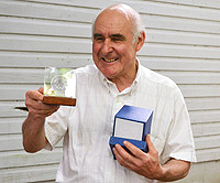


Latest Images